Book 1 gave you the foundation. You and the disc. Gravity, wind, walls, and reps. Your hands got strong. Your throws got consistent. Your body got conditioned. You built something real, alone, in the quiet of your backyard and the open space of your local park.
Book 2 added a person. You found your tossing tribe. You learned what 45 minutes in a park with a friend and a disc can do for your game. You discovered that partner practice is not just training. It is friendship, conversation, experimentation, and the kind of low pressure repetition that builds muscle memory faster than anything else.
Those two things, the solo foundation and the partner practice, are enough to make you a dramatically better player than you were before you picked up this book. And I mean that sincerely. If all you did was the Hula Hoop Drill from Book 1 and one tossing session per week from Book 2, you would be ahead of 90% of casual players within a few months. The fundamentals are that powerful.
What Is Coming Next
Book 3 is where everything changes. Book 3 is the full game.
Offense and defense. Vertical stack and horizontal stack. Zone and man to man. The force, and the philosophy behind whether the force is always a good thing. Cutting as a conversation with space, not a set of memorized routes. The dump, the swing, the reset, and why the teams that use them win more than the teams that always push forward.
Book 3 is where you learn the 1, 2, 3 numbered cut system that brings clarity and energy to every point. It is where you meet the three captain model: an offensive captain, a defensive captain, and a spirit captain who builds the team's identity and keeps the culture strong. It is where Spirit of the Game stops being a slogan and starts being something you practice, debate, and live on the field.
Book 3 is pickup games and tournaments. Huddle philosophy and halftime adjustments. What to do when your team is losing and what to do when your team is winning. How to read the field, read the defense, and read the moment.
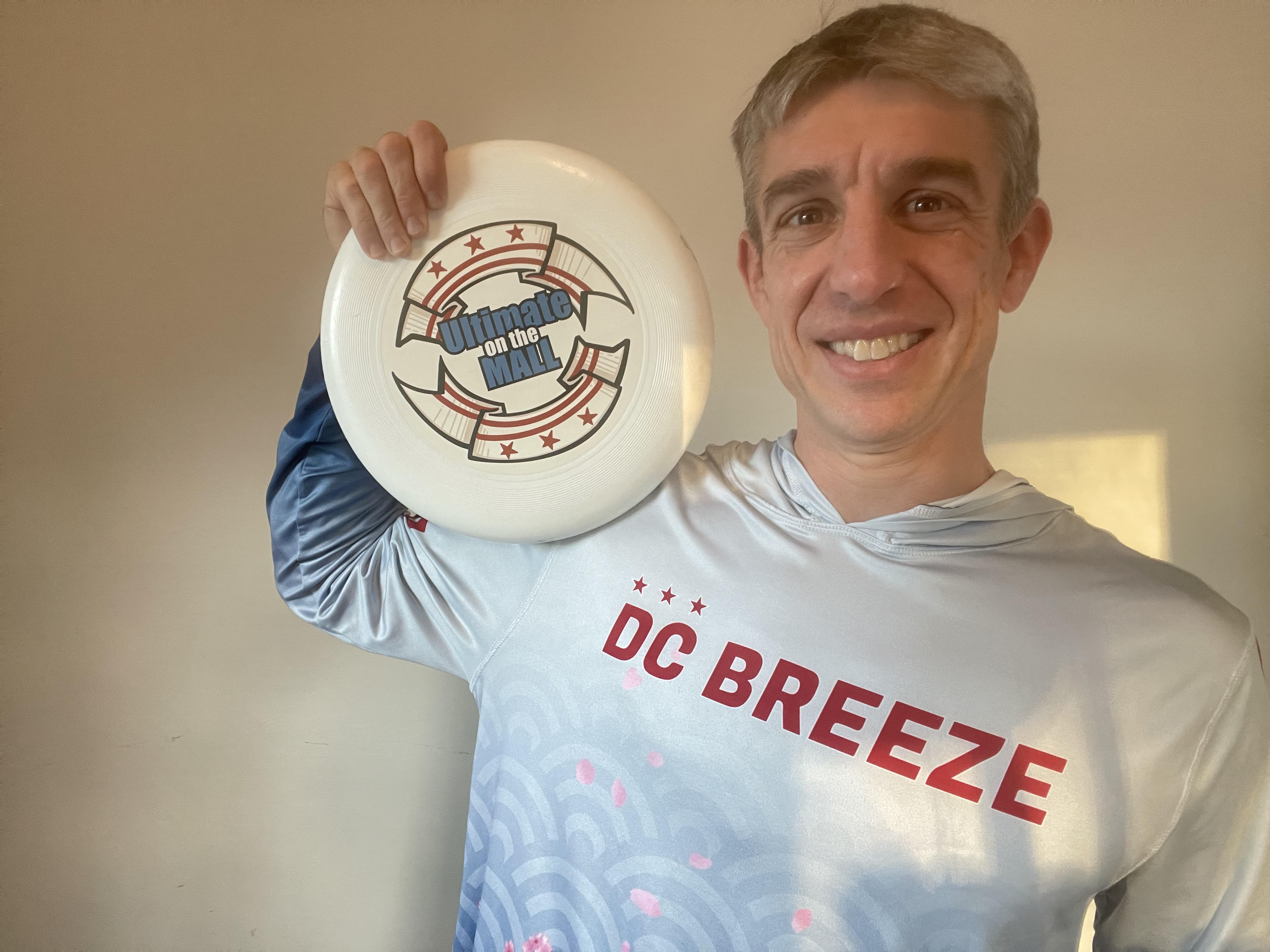
And Book 3 is where the expert voices really come alive. Khalif El-Salaam on defensive strategy and the sprint that wins every matchup. AJ Merriman and Charlie McCutcheon from the DC Breeze on how professional defenders think. Seth Martin on coaching philosophy and building a program from the ground up. Alex on the numbered cut system and how Spirit of the Game has evolved across decades. Jim Pistrang on what 30 years of coaching middle schoolers taught him about the sport.
The solo training from Book 1 and the partner skills from Book 2 combine in Book 3 into complete game play. That is the vision. From your first Hula Hoop spin to your first tournament point. From your living room carpet to the endzone.
This Book Will Grow
I want to be honest with you about something. Book 2 is intentionally short right now. Two chapters of real content and this bridge. That is not because there is nothing left to say about partner practice. It is because I want this book to grow from real experience and real feedback, not just from my own ideas.
There is so much more to explore here. What are the best drills to do with just one other person versus having two other people involved? What do competitive players do differently in their partner sessions compared to casual players? Are there creative games or challenges that make tossing sessions more fun and more productive at the same time? What about partner drills for specific skills like marking, breaking the mark, handler resets, or deep cuts?
I have my own answers to some of these questions, and they will become future chapters. But I also want yours.
Help Me Write This Book
This book is being written in public, one chapter at a time, and your input shapes what comes next. If you have a favorite drill, game, or routine that you do with your tossing partners, I want to hear about it.
Here are the kinds of things I am looking for:
What do you do with one other person that goes beyond just throwing back and forth? Any creative games, challenges, or structures that keep sessions fun?
What changes when you have three people instead of two? What drills or formations work best with a triangle?
Do you have a go to warmup routine with your throwing partner before pickup games or tournaments?
What is the single drill or exercise with a partner that has improved your game the most?
Send your ideas, stories, and drills to jonathon@ultimatefrisbee.net or find the conversation on r/ultimate on Reddit. I am actively posting there and collecting ideas from the community. The best submissions will be featured in future chapters with full credit to the contributor.
Ultimate Frisbee has always been a community sport. Self officiated. Spirit driven. Built by players, for players. This book should be no different. Help me make it the best resource for partner practice that has ever existed.
What You Have Built
Before we move on, take a second to recognize where you are.
You have a solo training system from Book 1 that covers everything from finger strength to full body conditioning. The Hula Hoop Drill. The Gravity Flick. The Discathlon. Seventeen chapters of drills, mechanics, and body training that you can do any time, anywhere, by yourself.
You have a partner practice habit from Book 2. A list of people you can text. A session structure that flows naturally. The pre game warmup trick that builds instant chemistry. The knowledge of how to throw to someone's limits and how to use every ground pickup as a mini drill.
And you have the mindset. The understanding that training is not something you schedule for an hour on Saturday. It is something you weave into the cracks of your life. Fifteen minutes of solo work. Forty five minutes with a friend. Stairs instead of elevators. Finger stretching while driving. A disc in the car at all times.
You are ready for the full game. You are ready for Book 3.
Mentor's Closing
When I started playing Ultimate over 20 years ago, I did not have a book like this. I learned by showing up to pickup games and figuring it out as I went. I threw bad throws and got embarrassed. I made cuts that went nowhere. I had games where I could not buy a completion and games where everything clicked and I could not explain why.
What I eventually figured out, slowly, over years, is what you now have in two short books. Practice by yourself to build the foundation. Practice with a friend to build the chemistry. Then bring both to the field and let your body do what it has been trained to do.
It is simple. It is not easy. But it works. Every single time.
I will see you in Book 3. Bring your cleats. Bring your friends. And bring everything you built here.
May good huck be with you. :)