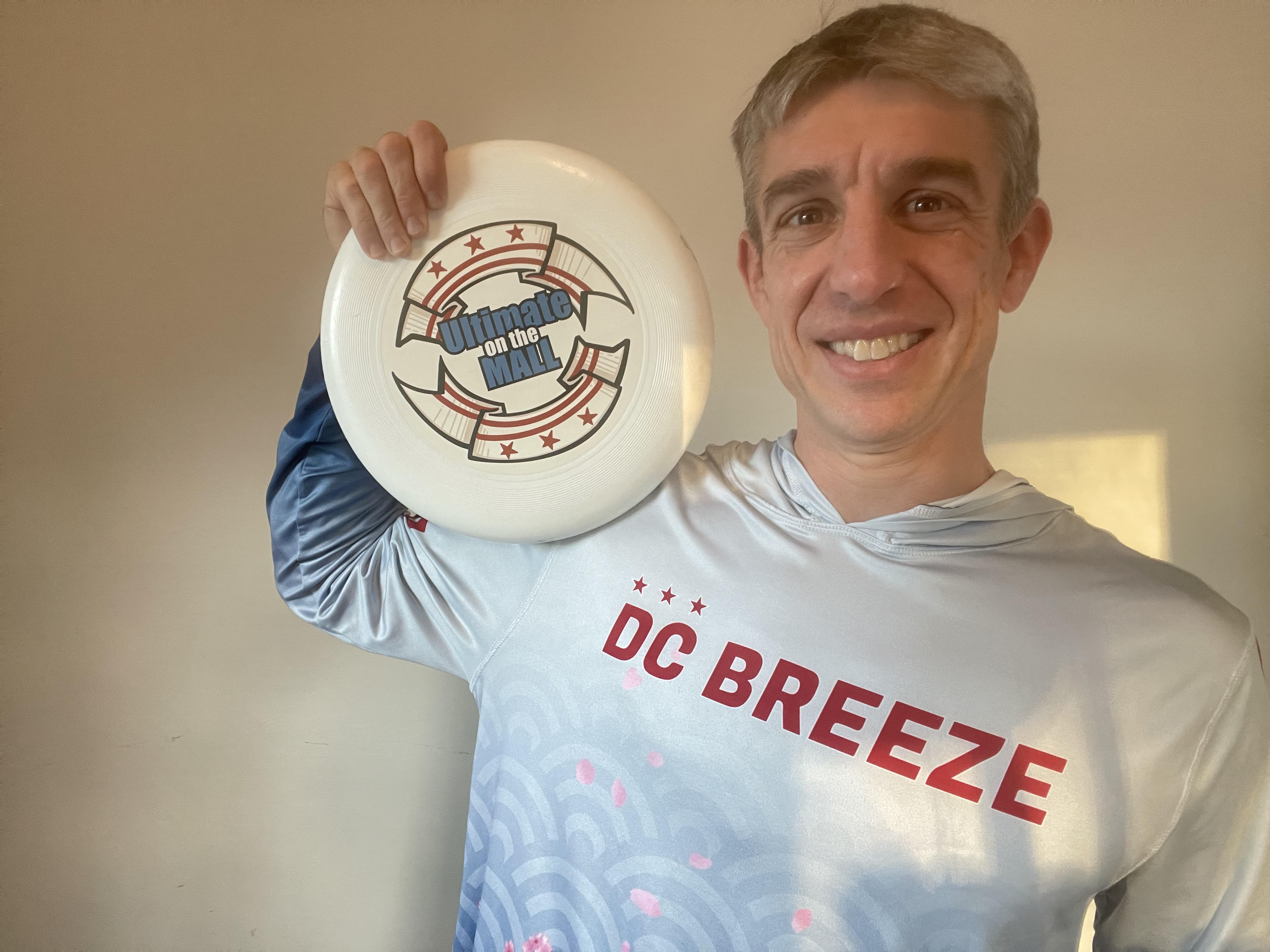
It was a Sunday morning at Nolte, and the sun was just starting to warm the dew off the grass. I caught the pull, pivoted, and looked downfield. My teammate Shawn was already moving, not sprinting, just drifting into position like he had read my mind. I faked backhand, watched the mark bite, then threaded an inside out flick through a gap that should not have existed.
Shawn caught it in stride, and before his defender could react, he had already dished it to Jesse cutting deep. Touchdown.
The whole sequence took maybe six seconds. No plays called. No hand signals. Just flow.
That is what offense looks like when it clicks. Now let me teach you how to make it click for you.
Your First Ten Games
If you are new to Ultimate, here is what happens: the other team pulls the disc, launching it toward your end zone. They start sprinting at you like wild animals. Your team scrambles into some kind of formation. And suddenly you are in the middle of a fast moving chess match.
The first thing you want to do is identify the alphas on your team. Who looks the most confident? Who have you seen throw well during warmups? Who seems to naturally organize people? Let those players handle the first few throws. Your job in those early possessions is simple: find open space where a handler can see you, and be ready to catch.
Reading Your Defender
Every offensive play starts with understanding who is guarding you.
When the disc goes up, I start at a slow tempo. Is my defender giving me space, or are they tight on me? If they give me space, I can drift to an open spot. If they are close, I need to put a move on them first.
The move does not need to be fancy. Cut toward the disc, then away. Cut left, then right. You are testing their reactions. How quickly do they change direction? Do they bite on fakes? Are they watching me or the disc? Within a few seconds, you should know their tendencies. Then you attack their weakness.
The Dump Reset: Your Best Friend
Here is something new players do not realize: the easiest throw in Ultimate is backward.
If you are near the handler and they look stuck, circle behind them. This is called offering a dump reset. You are giving them an escape valve. Run behind the handler until you are open. Stop and let them know you are there, I usually just make eye contact rather than yelling. Catch the easy backward pass. Immediately look to give it right back to them.
This resets the stall count and takes all the pressure off. Ben Jagt describes his offensive philosophy as being a "space maker." That is what you are when you offer a dump reset. You create breathing room for your whole team.
After You Catch: Stay Calm
You caught the disc. Now what?
You have maybe one or two seconds before the mark sets up on you. This is precious time. Look forward first. Is anyone streaking deep? Look behind and beside you. Is someone clearly open? If nothing is obvious, settle in and start scanning.
Once the mark arrives and the stall count begins, your job is to fake, pivot, and scan. Use shoulder fakes and pump fakes. Stretch your pivot foot to create throwing windows. Keep your eyes moving across all your options.
The First Cut Sets the Tone
Here is the most important offensive concept nobody teaches properly: the first cut determines everything.
You can have the fanciest formations in the world. But if your team cannot establish who makes the first cut, none of it matters. The first cut tells the defense: we are organized. We know what we are doing. When the first cut fails, when everyone stands around waiting, the defense relaxes. They start poaching lanes. They get confident.
The 1, 2, 3 System
Here is how I solve this problem. Before the pull, I tap three people:
"Shawn, you are one."
"Julie, you are two."
"Frank, you are three."
Now everyone knows the sequence. I am looking for Shawn first. If he is covered, I scan for Julie. Frank is my third option.
This works far better than rigid formations because the defense cannot predict who is cutting. It is based on matchups, not patterns. It puts decision making in the hands of the players on the field.
→ Action Step: If you are new and nobody is calling out cut order, ask. Say "Who should go first?" That simple question shows awareness and often prompts the veterans to organize.
Vertical Stack vs Horizontal Stack
You need to know both formations, even though I have a clear preference.
Vertical stack: Seven players form an L shape. Two handlers near the disc, five cutters lined up vertically down the middle. This creates two clear lanes on either side.
- The good: Very structured. Everyone knows where to stand. Easy to teach new teams quickly.
- The bad: Predictable. Defense knows cuts come from the front or back of the stack. Easy to defend with switches.
A player at Nolte who played at Stanford told me the vertical stack was essentially invented there in the early days of organized Ultimate. It works, especially for teams that need to organize quickly.
Horizontal stack: Four cutters spread horizontally across the field, three handlers behind them. This creates space both in front for unders and behind for deeps.
I prefer horizontal because it feels more natural, everyone can read and react simultaneously, and the defense has to guess more. It is like jazz. Everyone improvising, but somehow it fits together.
The key to ho stack: do not all go at once. Watch your teammates. If two people cut under, you go deep. If everyone goes deep, slide in for the easy under cut.
The Patience Principle
Let me tell you about a universe point I will never forget.
It was my third hat tournament. Universe point. Win or go home. The other team got the disc and started working it. Dump. Swing. Dump. Swing. They must have swung the disc back and forth fifteen times. They must have made forty or fifty passes. No long throws. No hero plays. Just relentless short passes, cutting back and forth.
By the fortieth pass, we were exhausted. Someone on our team lost their mark. Easy five foot pass into the end zone. Game over.
We lost because they were more patient than us. They were more conditioned. They understood that offense is not about the spectacular play. It is about wearing down the defense until they break.
Is that style boring? Maybe. But when the game is on the line, protect the disc. Swing it. Reset. Be relentless.
Positive Talk Creates Positive Plays
When a teammate drops a catch, I immediately say: "That was so close. You will get the next one."
When a throw sails, I call out: "That was the wind. Shake it off."
When a good thrower messes up a few in a row: "No worries. You are just calibrating. You will dial it in."
Confidence is contagious. So is doubt. Be the teammate who builds people up. This is not just good spirit. It is good strategy. A confident teammate makes better throws and harder cuts than one who is drowning in self doubt.
The Art of Clearing
You know what is just as important as a great cut? A great clear.
If you make a cut and do not get the disc, you have two options: stand there clogging the lane, or sprint out of the space as hard as you sprinted in. Option two is the only right answer.
When you clear aggressively, you take your defender with you. That opens space for the next cutter. That is teamwork. That is how good offense flows.
Advanced Techniques: Awareness Without Looking
Echolocation: When you are cutting toward the handler with your defender behind you, how do you know how much separation you have? Use your ears. Listen for footsteps. How loud? How close? Heavy breathing on your shoulder means you need to change direction. Fading footsteps mean you have separation. Your eyes stay locked on the handler. Your ears gather intel on the chase.
Shadow reading: This only works on sunny days, but it is like a cheat code. Watch the shadows on the ground. You can see your defender's shadow trailing yours. Is it gaining? Drifting left? Falling back? This gives you positioning data without turning your head.
I have made cuts based purely on watching a shadow slow down, knowing my defender bit on a fake.
The Pull: Starting the Sequence
The pull begins every offensive possession. A few things to know: you do not have to catch it. Letting it land is perfectly fine. If you want to catch it, that shows confidence and can intimidate the defense. But never let it roll past you.
Know Your Role
Harper Garvey thinks of himself primarily as a handler. Ben Jagt thinks of himself as a cutter. Both are elite players, but they have clarity about their roles.
When you step on the field, ask yourself:
- Am I here to handle and make safe throws?
- Am I here to cut and attack space?
- Am I here to go deep and stretch the field?
You can do multiple things, but having a primary role helps the team function. When everyone knows their job, the offense flows.
Attacking Turnovers
The wildest moments in Ultimate happen right after turnovers. Disc changes hands. Offense becomes defense. Everyone is out of position.
Elite players live for these moments. Do not admire the play. Do not jog back into formation. Attack. The team that just turned it over is scrambling. Hit them before they set up. Find the fast break. Chaos is your friend if you are the first to recognize the opportunity.
End Zone Offense
When your team gets close to scoring, everything compresses. More people in less space.
Ask yourself: should I go in and cut, or stay out as a reset option? Is there already traffic in the end zone? Can I stretch the defense by standing in a corner?
If you enter the end zone, put moves on your defender or clear out. Watch their head and body. When they turn one way, cut the other. Keep them guessing.
Sometimes the best thing you can do is stand still in a corner. You stretch the defense and give the handler a clear target if they can get close.
Building Trust Through Catches
Here is something you need to understand: every catch you make gives the next handler confidence to throw to you.
If you catch seven in a row, handlers will look for you. They will connect your face with reliability. They will put the disc your way. If you drop one, some handlers will wave you off next time. They will choose someone with a higher catch rate.
This is why catching matters so much. It is not just about that one play. It is about building trust for every future play.
Wrap Up
◆ Possession is 90% of the game. Make the safe throw and keep the disc moving.
◆ Read your defender in the first few seconds. Test their speed, their reactions, and whether they watch you or the disc.
◆ The dump reset is your best friend. The easiest throw in Ultimate is backward.
◆ The first cut sets the tone for the entire possession. Use the 1, 2, 3 system to establish cut order before the pull.
◆ Both vertical and horizontal stacks dissolve after the first throw. The stack is a starting point. After that, it is all improv.
◆ Patience wins championships. Dump, swing, reset. Wear down the defense until they break.
◆ Positive talk creates positive plays. Build your teammates up, especially after mistakes.
◆ Clear aggressively after failed cuts. Take your defender with you and open space for others.
◆ Use echolocation (listening to footsteps and breathing) and shadow reading to track defenders without looking.
◆ Know your role. Handler, cutter, or deep threat. Clarity helps the whole team flow.
◆ Attack turnovers immediately. Chaos is your friend if you are the first to recognize the opportunity.
Mentor's Closing
I have played offense in pickup games for over twenty years. I have been on teams where the flow was so perfect that every cut felt inevitable and every throw felt easy. I have been on teams where everyone was cutting to the same space and we turned it over on the third pass.
The difference was never talent. It was always understanding.
The teams that flow together understand possession. They understand that the dump reset is not a failure, it is a strategy. They understand that clearing is as important as cutting. They understand that the first cut sets the tone and that patience beats heroics when the game is on the line.
When you step onto the field, do not try to do everything yourself. Find your role. Read your defender. Communicate with your handlers. Make the safe throw. Clear when you do not get the disc. And when the moment comes, when the defense finally breaks and the lane opens up, be ready to attack.
That is how you score. Not with hero plays. With patience, precision, and flow. :)