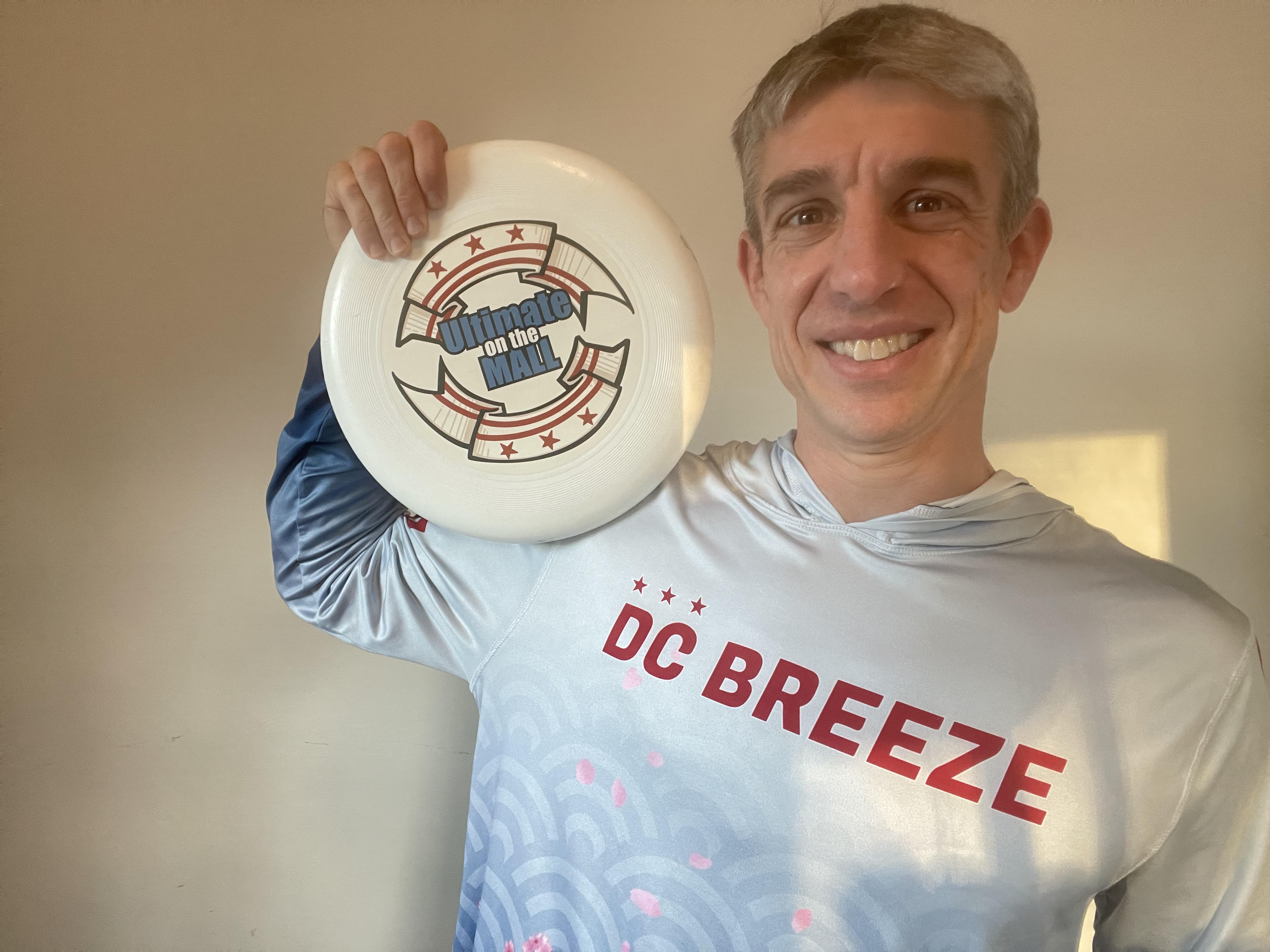
Let me be honest with you upfront: as I write this chapter, I have never been a formal team coach. But that is about to change.
This spring 2026, I am starting my career as a WAFC middle school coach here in the DC area. I cannot tell you how excited I am. After twenty years of playing, studying, and writing about this sport, I finally get to stand on the sidelines and help young players fall in love with the game the way I did.
I know I have a lot to learn. Coaching a team is different from coaching individuals at pickup games. Managing substitutions, building a roster, teaching rules to twelve year olds who just want to run and throw, that is a whole new challenge. So consider this chapter a snapshot of where my coaching philosophy stands right now, built on the wisdom of coaches like Jim Pistrang and Seth Martin who have decades of experience I am only beginning to accumulate.
As I learn from experience, I will expand this chapter. The drills that work. The mistakes I make. The moments that surprise me. For now, here is everything I have gathered from years of informal coaching, expert interviews, and studying what the best coaches in this sport actually do.
What Coaching Really Comes Down To
Coaching is about two things. Uniting a team of players to outscore the opponent. And teaching players how to expand their skills, test their limits, and discover what they are capable of becoming on and off the field.
That second part might be even more important than the first. Wins fade from memory, but the confidence you build in a young player lasts forever.
But I have coached a lot of people individually over the years. Players come up to me after pickup games at Nolte and ask how they can improve. They see that I have studied the game, that I understand spacing and timing and technique. So I assess their abilities and watch them play. Then I give them feedback.
I have coached my sons Luke and Eric. I have helped warm up nervous middle schoolers before their games. I have thrown with kids who kept dropping the disc, just to get the jitters out and build their confidence. I have taught people how to throw pulls, how to read defenders, how to find open space.
Here is what I have learned: you do not need a clipboard and a whistle to be a coach. If you can throw a disc reasonably well and you care about helping others improve, you can make a difference.
What Makes Ultimate Coaching Unique
In basketball, the coach calls timeouts and draws up plays. In football, the coach sends in formations from the sideline. In Ultimate? The coach cannot get involved in disputes. The players officiate themselves.
This is beautiful. And it changes everything about coaching.
Your job is not to control the game in real time. Your job is to prepare your players so thoroughly that when they are on the field, they already know what to do and your captains lead the team in battle.
What players need to know before stepping on the field: the rules inside and out, the strategies your team runs, how to handle conflict with Spirit, what a travel is and when to call it, how to call picks properly, and when to contest a foul versus when to let it go.
Because when that moment happens in a game, you cannot run out there and fix it for them.
The Jim Pistrang Model: 30 Years of Coaching Wisdom
Jim Pistrang is a legend. He fell in love with Frisbees at age eight, back in 1961 when Wham O was test marketing their first discs. He helped start the Tufts University Ultimate team in 1972. He was featured in Time Magazine.
And since 1994, he has been coaching middle school Ultimate in Amherst, Massachusetts. Thirty years of watching kids transform from beginners who cannot throw into elite high school and college players.
Jim does not believe in endless drills. He believes in playing. His teams play over thirty games per spring season. That is as many games as most high school programs. Volume of game experience accelerates development faster than any drill sequence ever could.
The Dual Track System
Jim runs a brilliant program that balances inclusion with competitive excellence.
The intramural league: Open to all 5th through 8th graders. Sixty to seventy kids participate each season. No tryouts required. Everyone plays, regardless of skill level. Focus is on fundamentals and fun.
The travel team: Players must try out to make the roster. If you make the travel team, you are required to also play in the intramural league. Travel team players are expected to be leaders and teachers. They help coach the intramural kids, passing on what they learn.
This creates a beautiful cycle. The best players develop leadership skills by teaching. The younger players learn from peers they look up to. Everyone grows together.
Teaching Youth: Less Is More
One of Jim's most valuable insights applies to anyone coaching beginners: "You can't teach middle school kids too much because it won't be retained. Fewer, simpler things work better than lots of complicated things."
Jim's three fundamentals for beginners:
- How to catch (the foundation of everything)
- How to dump it off quickly to somebody else (even just a two foot throw)
- How to play defense (because that is more important anyway)
Then he lets them play. He lets them experiment. He lets them figure things out through experience rather than lectures.
The mini game approach: For the first three to four weeks of the season, run smaller games. Use 4v4 or 5v5 on smaller fields. Regular Ultimate rules, regular disc size. Smaller teams mean more reps for every player. Everyone touches the disc constantly.
Why Jim skips zone defense with beginners: Zone compartmentalizes players too much. A kid playing wing just stands there, rarely touching the disc. They are not really learning anything. Person to person defense develops skills faster and keeps everyone engaged and moving.
The Patience Principle
This might be Jim's most important lesson for coaches: "Be patient. Some kids will never be great athletes. But I've had kids who were totally spaced out in 7th grade and came back in 8th grade motivated and went on to be fantastic high school and college players."
He shared a story that stuck with me. A kid in fifth grade wanted nothing more than to sit on the sideline. He did not want to throw. He did not want to run. He just wanted to sit. Jim's assistant coaches threw with him anyway, day after day.
The kid remained spaced out through fifth, sixth, and seventh grade. Nothing seemed to click. Then eighth grade arrived. Something changed. The self doubt faded. The confidence emerged. He started trying. He wanted to learn. He became a player.
Coaching Creates Culture
Every coach creates a culture, whether they mean to or not. That culture dictates the cohesiveness of the team, how often players practice on their own, whether mistakes are learning opportunities or reasons for blame, and how players treat opponents and each other.
Seth Martin, a high school coach who has been playing Ultimate for decades, has a rule that captures this perfectly: "You gotta earn the right to throw a hammer."
How Seth's rule works: players start with backhands and flicks only. No fancy throws until you prove you can execute the fundamentals consistently. This creates a culture of patience and progression. Privileges are earned, not assumed.
Questions to ask yourself about culture: Do you want a team that takes risks and learns from turnovers, or a team that prioritizes possession above all else? Do you want players who defer to the most talented teammates, or players who share the disc and develop together? Do you want intense competition or relaxed fun, or both?
There are no wrong answers. But you need to be intentional. Culture does not happen by accident. It happens because someone builds it.
The Parent Coach: Supporting From the Sidelines
Not every coach runs practices. Some of us coach from the sidelines during our kids' games.
When Luke plays in his middle school league, I watch closely. I notice which players are struggling. I see the kid who has dropped three discs in a row and is now afraid to get open.
During breaks, I grab a disc and throw with that kid. Just easy tosses. Catch, throw, catch, throw. Nothing complicated. When you have caught and thrown with someone, you trust them more on the field. That connection matters.
The real secret of coaching youth: it is mostly about helping kids relax, have fun, laugh, smile, and just practice.
Self Coaching: Before You Coach Others
Let your weak hand teach your strong hand. Try throwing a flick with your left hand. Feel the frustration of being a beginner again. That empathy will make you a better coach. When you experience how hard it is to learn something new, you develop patience for players who are struggling.
Film yourself. The gap between what you think you are doing and what you are actually doing is often huge. Record your throws on your phone. Watch your footwork and release point. Compare it to elite players on YouTube. That gap is where improvement lives.
Understand that change takes time. You cannot expect huge changes right away. Your body needs repetition to feel comfortable extending a certain way, releasing at a certain angle, generating torque and twist. The transformation does not happen overnight. It happens through consistent, patient practice.
→ Action Step: This week, try throwing ten flicks with your non dominant hand. Feel what it is like to be a beginner again. That frustration is what your students feel every day.
Advanced Coaching: The Clam Defense
For coaches ready to go deeper, here is a hybrid defensive scheme that Jim Pistrang teaches his travel team.
The clam is a combination of person to person and zone defense.
The front three players mark people: One defender on the person with the disc. Two defenders on the apparent handlers. If those handlers clear out, the front three do not follow. They wait for someone else to cut into that space.
The back four players play zone: Short deep positioning. Wings reading the field. Adjusting based on disc movement. Covering open space rather than specific players.
Why the clam works: it confuses teams that have never seen it. They think it is person to person defense and get completely lost. It creates strategic advantages through creative scheming. It is a great example of how coaching can outsmart pure athleticism.
Core Coaching Responsibilities
- Conditioning: Ultimate requires endurance. Establish conditioning standards and hold players to them. Build running into every practice.
- Practice planning: You cannot cover everything in one practice. Pick a focus and build the session around it. Keep huddles short. Maximize playing time.
- Substitution management: Have a system that everyone understands. "Every third point you go in, every third point you come out" works well. Sub drama kills teams faster than anything.
- Teaching rules: Because Ultimate is self officiated, players need to know the rules cold. Quiz them on scenarios during practice. Make rules education a regular part of every week.
- Spirit of the Game: Model it yourself first. Teach it explicitly. Let players determine their own spirit scores after games. Jim Pistrang takes spirit seriously, and it is his first serious talk with the travel team each year.
Getting Started as a Coach
If you want to coach, here is my advice: find your local Ultimate community and start throwing.
Connect with your local club or pickup group. Volunteer your time at youth practices. Throw with kids who need extra reps through established school programs. See how relationships develop from there.
You do not need to commit to coaching a full team right away. Be the person who shows up consistently. Go with the flow.
USA Ultimate offers coaching certifications that provide structured learning and credentials. But do not let the lack of certification stop you from getting involved at the grassroots level.
The sport needs people who care. People who will show up. People who will toss discs for an hour on a Saturday morning with kids who are just learning to love the game.
Wrap Up
◆ You do not need a clipboard and a whistle to be a coach. If you care about helping others improve, you can make a difference.
◆ Ultimate coaching is unique because the coach cannot control the game in real time. Your job is to prepare players so they already know what to do.
◆ Jim Pistrang's model: fun and hard work are not mutually exclusive. Prioritize playing time over instruction. Let kids learn by doing.
◆ The dual track system balances inclusion (intramural open to all) with competition (travel team with tryouts). Travel team players teach the younger kids.
◆ Less is more with beginners. Teach catching, dumping, and defense. Then let them play.
◆ Be patient. The disengaged kid today might be tomorrow's star. Keep the door open for everyone.
◆ Culture does not happen by accident. It happens because someone builds it intentionally.
◆ Coach yourself first. Throw with your weak hand to feel what beginners feel. Film yourself to close the gap between perception and reality.
Mentor's Closing
In a few weeks, I will walk onto a middle school field as a WAFC coach for the first time. I will have a roster of kids who are excited and nervous and full of energy they do not know what to do with.
And I will have a head full of wisdom from Jim Pistrang, who has been doing this for thirty years. From Seth Martin, who teaches his players to earn the right to throw a hammer. From every player who has ever come up to me at Nolte and asked how to get better.
I am going to make mistakes. I am going to run drills that do not work. I am going to call substitutions that frustrate players. I am going to learn, on the field in real time, that coaching a team is nothing like coaching individuals at pickup.
And I cannot wait.
Because the best coaches are not the ones who have all the answers. They are the ones who keep showing up, keep learning, and keep caring about the people they are coaching. Jim Pistrang has been doing that for thirty years. I am just getting started.
If you are thinking about coaching, do not wait until you feel ready. You will never feel ready. Just start. Find a field. Find some kids. Bring a disc. And let the game teach all of you together.
This chapter will grow as I grow. Check back. I will have stories to tell. :)