Here is a secret that took me twenty years to fully understand: kids do not learn like adults.
Adults can sit through a thirty minute lecture, take notes, and apply what they learned. Kids? They have already tuned out after two minutes. They are poking the kid next to them. They are watching a squirrel. They are wondering what is for dinner.
This is not a flaw. It is how developing brains work. And the best youth coaches do not fight it. They use it.
The Teaching Cycle That Works
The best youth programs in the country all follow a similar approach: explain the skill briefly (one to two minutes max), demonstrate it yourself, have kids imitate what they saw, give quick feedback, repeat until it clicks.
This is called the "Explain, Demo, Imitate, Critique, Repeat" cycle. It works because it respects how young brains actually process information.
Why 3v3 Changes Everything
At my son Luke's middle school league, I have watched dozens of practices. The scrimmages? Kids love them. The line drills? Kids goof off, shove each other, and mentally check out while waiting for their turn.
But not all scrimmages are created equal. When they play 6v6 or 7v7, the weaker players hide. They drift to the edges of the field and avoid the disc. The alpha kids get all the touches while the quieter ones barely participate.
When you switch to 3v3? Nobody can hide. Everyone touches the disc. Everyone learns.
The Pass Count Drill: A Game Changer
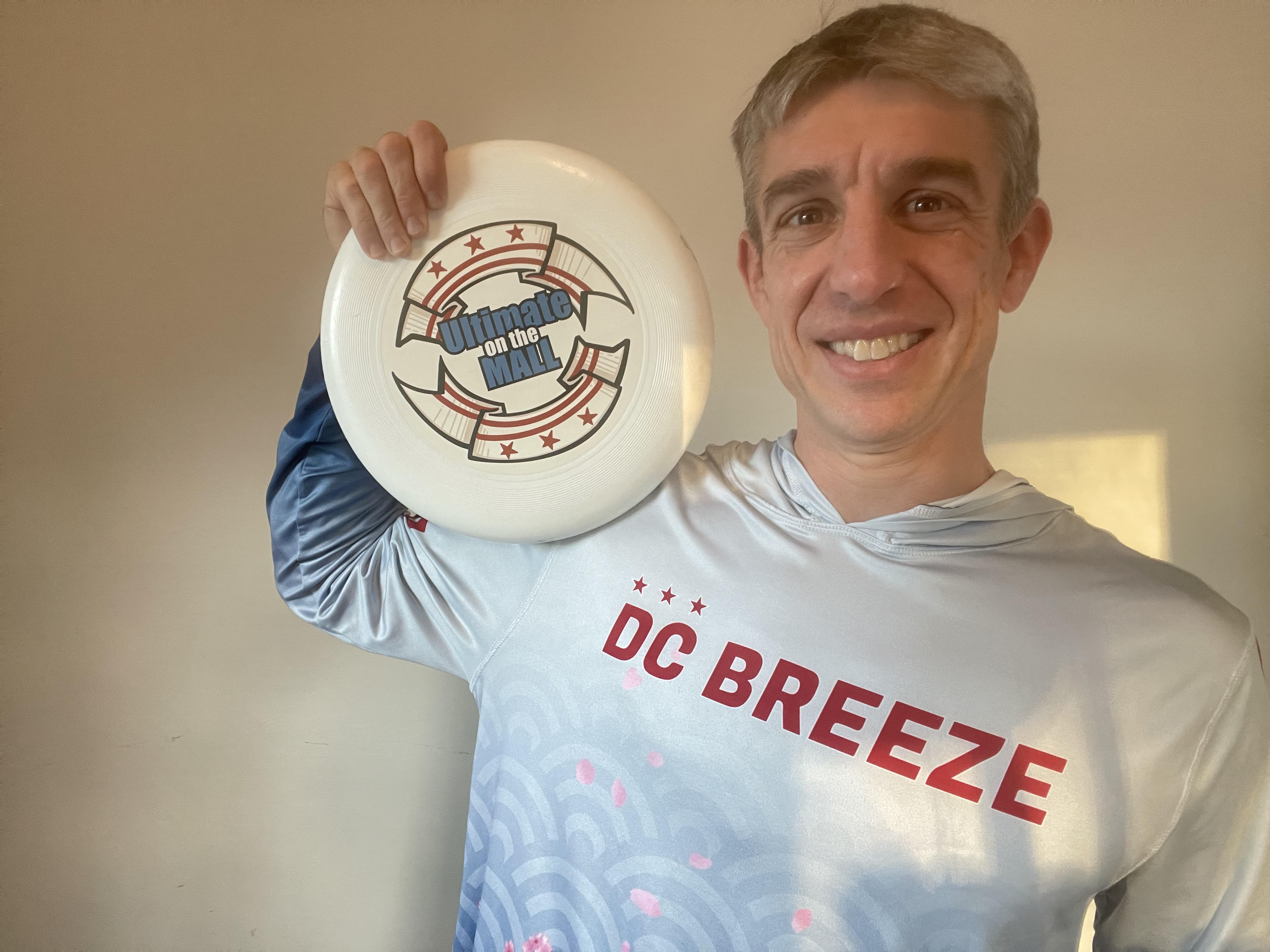
At a DC Breeze practice, they split us into groups of five. Three on offense, two on defense. The offensive players had to complete as many consecutive passes as possible without dropping the disc or getting it blocked. No end zones. No scoring. Just passing.
First round, my group got 20 passes. Second round, we hit 30. By the third round, we were clicking. We understood each other's tendencies. We knew when to dump backwards, when to swing it wide, when to attack. We reached 60 consecutive passes.
What this drill teaches without anyone having to explain it: dump throws are valuable not failures, reset passes keep the offense alive, communication happens naturally under pressure, stamina matters because you are running constantly, and trust builds with every completed pass.
→ Action Step: Try this with your youth team. Groups of five with three on offense and two on defense. Count consecutive passes. Run it three times. Watch the numbers climb. Watch the kids start working together instead of trying to be heroes.
The Eight Week Progression
Week 1 (Foundations): The backhand throw and the pancake catch. Introduce players officiating themselves. Partner Pass and Move drill, where pairs travel down the field throwing backhands.
Week 2 (Movement): Throwing to space and catching while running. "Getting open" means positioning your body between defender and goal. Come To Drill, where receivers must run toward the disc until it is caught.
Week 3 (The Forehand): The flick grip and wrist snap. Eliminating arm pushing because the power comes from the wrist. Elbow Lock Flicks, where players hold their throwing elbow with their off hand, forcing the wrist to do all the work.
Week 4 (Pivoting and Faking): Step across (backhand) and step out (forehand) pivots. Using fakes to move the defender's feet and create throwing windows. 3 Person Break Mark drill.
Week 5 (Offensive Systems): The L cut and V cut. The vertical stack, which keeps the middle of the field open. 4 Line Stack drill where players cut from the back, receive a pass, then clear.
Week 6 (Defense): Marking and downfield defending. "The Force" means standing on one side of the thrower to push the game toward a specific sideline. 1v1 End Zone drill.
Week 7 (Advanced Throws): The hammer and inside out/outside in curves. Conflict resolution, letting players negotiate fouls during scrimmages. Piggy in the Middle with curved throws over a central defender.
Week 8 (Tournament): Game management and Spirit of the Game. Mini tournament with 5 minute games. Spirit Circles after each match where teams share compliments about each other.
Teaching the Throws: Memory Cues That Stick
Kids forget verbal instructions almost immediately. What they remember? Analogies. Images. Weird phrases that make them laugh.
The backhand: Use the "Power Grip" with fingers curled into the rim and thumb pressing firmly on top. Tell them it is like starting a pull lawnmower.
The forehand (flick): Make a "gun" shape with your hand. Middle finger presses against the rim, index finger toward the center for balance.
- The Serving Tray: Tell kids to imagine the disc is a tray of drinks. If it tilts too much, the drinks spill. This corrects the common "blade" throw where the outside edge drops too early.
- The Towel Snap: The power comes from a relatively slow arm movement that suddenly stops, concentrating all the force into a violent wrist snap at the release point. Imagine snapping a wet towel at someone.
- Painting the Wall: For a level release, tell kids to imagine their fingers are a paintbrush painting a perfectly horizontal line on a wall.
The Elbow Lock Drill: This drill single handedly fixes most forehand problems in middle schoolers. Player holds their throwing elbow firmly with their non throwing hand. The only way to generate power is through the wrist snap. The arm pushing habit disappears because it literally cannot happen. Do this for five minutes at the start of every practice until the wrist motion becomes automatic.
Drills That Actually Work
After years of watching youth practices, I have identified what separates drills kids love from drills kids endure. The difference comes down to three things: competition (someone wins, someone loses), consequence (getting eliminated or staying in), and continuous movement (no standing around waiting).
The Chopping Block: One thrower, one mark, one receiver. Line of players waiting. Thrower tries to complete a pass around the mark. If successful, the thrower stays and the mark rotates out. If blocked, the thrower is eliminated, but gets one chance to redeem themselves by blocking the next thrower. Last player standing wins. The elimination format creates genuine stakes and the redemption rule keeps everyone engaged.
4 Box Keep Away: A 30x30 yard square divided into four 15x15 boxes. Two teams of three play keep away. If the disc is caught while two offensive players are in the same box, it is an automatic turnover. This forces kids to look away from the disc to see where their teammates are. They learn spatial awareness because the rules punish them for crowding.
Duck Hunt: Receivers run through a series of cones while throwers try to hit them with discs from the sidelines. Throwers learn to lead a moving target. Receivers learn to maintain their stride while tracking the disc.
Shadow Throwing: Martial artists do not punch bags all day. They practice the movement over and over. Apply this to throwing: kids stand alone and execute the full throwing motion with grip, wind up, release point, and follow through, without actually releasing the disc. Build the neural pathways before adding the chaos of a real throw. Have kids do shadow throwing at home, five minutes a day practicing their weakest throw.
The Separation Problem
Most young players have no idea how to create separation from their defender. They know they are supposed to "cut." They know they should "get open." But when a defender is shadowing them step for step, they freeze.
Harper Garvey told me: "Faking is the most underrated skill in Ultimate. Most players never practice it."
How to teach separation: create a drill where players must fake at least twice before they are allowed to throw. Make it non negotiable. For cutting, teach the two step juke: plant hard in one direction (sell it with your eyes, your body, everything), then explode the opposite way. Those two steps, done with commitment, will beat most defenders at the youth level.
Practice lots of cutting drills where players must do two or three quick cuts in a row before running to the disc or away from the disc. Practice both directions.
Rules That Create Inclusion
One of the biggest challenges in youth Ultimate is making sure the quieter, less confident players get involved.
The Special: Before the game, designate one player as "The Special." The disc must be thrown to that player at least once before the team can score. Rotate the Special each point. Less confident players suddenly matter and have to be involved for the team to succeed.
All Touch Points: Every player on the field must touch the disc at least once before a goal counts. This prevents a few athletic kids from ignoring teammates. Everyone gets reps.
The First Throw Problem
At Luke's tournament, his team was facing a strong opponent in windy conditions. Every time they received the pull, they could not get the first throw off. The defense clamped down. Turnover after turnover, right near their own end zone. And each turnover meant an easy score for the other team.
→ Action Step: Practice the first throw specifically. Run drills where the offense starts backed up against their own end zone with aggressive defenders and must complete just one pass to reset the field. Teach kids that going backward is not failure. A dump throw that moves the disc ten yards sideways is infinitely better than a turnover near your own goal line. Practice with three strong defenders against five okay offensive players near the end zone, just trying to get it out.
The Spirit Scorecard
After every game, teams in the best youth programs do not just record the final score. They rate each other on Spirit of the Game using five categories:
- Rules knowledge: Did they know and follow the rules?
- Avoiding contact: Did they make sincere efforts to avoid dangerous plays?
- Fair mindedness: Did they admit their own fouls? Listen to the other team's perspective?
- Self control: Did they stay positive even when losing?
- Communication: Did they speak respectfully during disputes?
Each category gets a score from 1 to 5. Teams share their ratings in a Spirit Circle after the game. This teaches kids that how you play matters as much as whether you win.
The Skill Assessment Checklist
Every martial arts studio assesses students before placing them in classes. Youth Ultimate should do the same.
Throwing: Can they complete 10 backhands at 15 feet? 30 feet? 50 feet? Same progression for forehands. Can they throw around a mark?
Catching: Two handed catches at chest height. Can they catch while running toward the disc? Can they catch with either hand?
Running: How fast over 40 yards? Can they change direction quickly? How long before they are gassed?
Game sense: Do they crowd the disc or create lanes? Can they shake a defender? Do they see open teammates?
After assessment, group kids by similar weaknesses. Take all the players who struggle with forehand throws and work specifically on that. Targeted coaching beats generic instruction every time.
Adults vs Kids: The Ultimate Scrimmage
At my sons' summer frisbee camp, the final day ended with a special scrimmage: counselors versus campers. Five counselors. Nine kids. The kids were fired up. They wanted to beat the adults so badly they could taste it.
Yes, we could throw over them because we are taller. But they could outrun us because they are younger. The game was surprisingly competitive, and more importantly, it was fun in a way that kid versus kid scrimmages sometimes are not.
What Parents Can Do
Assess your child honestly. Where are they strong? Where do they struggle? Find help for their weaknesses, whether that is a coach, an older player, YouTube tutorials, or backyard practice sessions.
Throw with them at home. Even five minutes of backyard catches builds connection and skills. Make it a routine, not an event. Build community by organizing informal throwing sessions with other kids. The more touch points with the sport, the faster they develop.
Making It Accessible: The Pay What You Can Model
Triangle Ultimate in North Carolina pioneered something brilliant: a sliding scale fee structure that removes economic barriers from youth sports. Full price for families who can afford it. Discounts at 25%, 50%, or 75% for families with financial constraints. Free registration for coaches, volunteers, and specific school partnerships.
The result? A broader, more diverse pipeline of athletes. Kids who might be priced out of travel soccer or club basketball find a home in Ultimate. If you are starting a program, consider this model. The sport grows when everyone can play.
Form First, Load Second
A critical principle for developing athletes: master the mechanics before adding weight or intensity. During puberty, kids' bodies are adapting rapidly. Teaching proper movement patterns now prevents injuries later.
For Ultimate, this means single leg squats as the foundational movement for cutting and jumping, core rotational work because throwing is a rotational act, and no added weight until form is perfect. The goal is not to build powerlifters. It is to build athletes who can play Ultimate for decades without breaking down.
Wrap Up
◆ Kids learn through action, not lectures. Never talk for more than two minutes before getting them moving.
◆ 3v3 should be the foundation of youth development. Nobody can hide. Everyone touches the disc.
◆ The pass count drill teaches dump throws, resets, communication, and trust without anyone having to explain it.
◆ Follow the eight week progression from foundations through tournament play. Structure creates confidence.
◆ Use memory cues that stick: the Serving Tray, the Towel Snap, Painting the Wall, starting a lawnmower.
◆ The Elbow Lock Drill single handedly fixes most forehand problems in middle schoolers.
◆ Rules like "The Special" and "All Touch Points" create inclusion and ensure every player gets involved.
◆ Practice the first throw specifically. Teach kids that going backward is not failure.
◆ The Spirit Scorecard with five categories teaches that how you play matters as much as whether you win.
◆ Form first, load second. Build good habits early. They last a lifetime.
Mentor's Closing
I watch my sons Luke and Eric play Ultimate and I see the future of this sport.
Not just in them, but in the kids they play with. The twelve year old who could not throw a backhand three months ago and now launches it twenty yards. The shy kid who finally called for the disc and caught a touchdown and could not stop smiling. The aggressive kid who learned to call his own fouls honestly and shook hands with the player he fouled.
Youth Ultimate is not about creating professional athletes. It is about creating people who know how to compete with integrity, communicate under pressure, and pick each other up after mistakes. Those skills do not expire when the game ends. They carry into classrooms, careers, and relationships for the rest of their lives.
If you are a parent, throw with your kids. If you are a coach, keep it fun and keep it moving. If you are a player who remembers what it felt like to be a beginner, go help a kid who is where you used to be.
The sport grows one young player at a time. And every one of them deserves someone who cares enough to show up, grab a disc, and say: "Here, let me show you something." :)