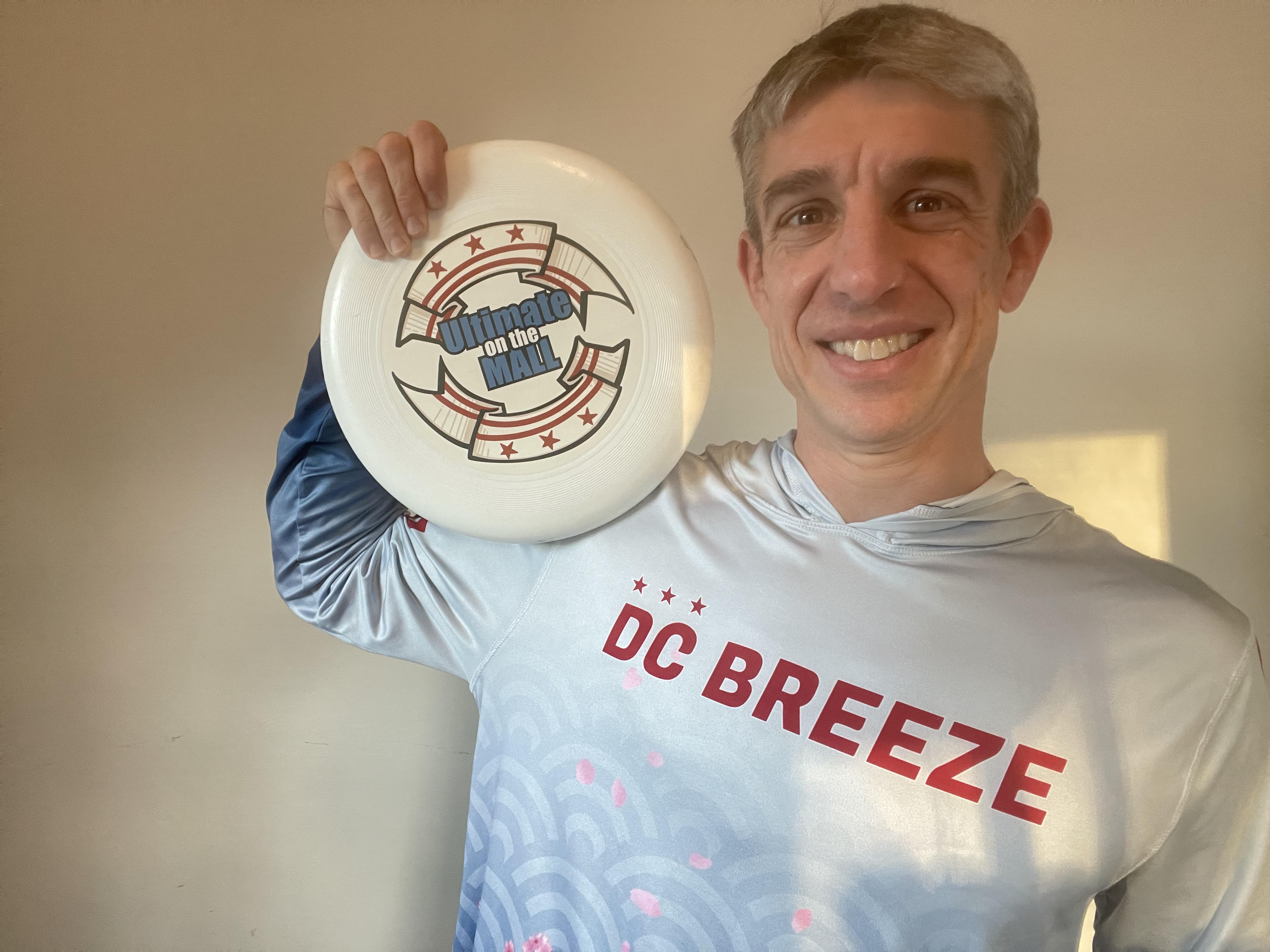
Lie down on your back. Grab a disc. Throw it straight up. Catch it when it comes back down. Repeat.
That is the simplest description of the most efficient rep machine in Ultimate Frisbee. No walking. No chasing. No setup. Gravity brings the disc right back to you, every single time, and it never gets tired of doing it.
One rep every two to three seconds. That is 20 to 30 reps per minute. 300 reps in under 15 minutes. No other drill in this book, no other drill in the sport, gives you this many touches on the disc this fast. And every single touch is training your fingers, your wrist, and your catching instincts simultaneously.
I have never seen anyone else teach these drills. Every time I show someone the lying on your back approach, they look at me like I am crazy. And then they try it, and within five minutes they understand why it works. This is one of the most unique things in this book, and I believe it has the potential to change how people learn the flick forehand from scratch.
Why This Works: Fingers and Wrist
When you throw a disc from your back, your arm does almost nothing. It cannot. You are lying down. There is no room for a big windup, no hip rotation, no kinetic chain. All you have are your fingers and your wrist.
That is the point.
About 50% of the work comes from your fingers pushing against the rim. You are pressing the disc up off your fingertips, snapping them forward almost like you are literally making a snapping sound with your fingers. That push is the exact same motion that generates spin on a flick forehand.
The other 50% comes from your wrist. The snap of the wrist works together with the finger push to send the disc up with spin and control. Your arm is involved a little, mostly for catching, but the throwing is all fingers and wrist.
This isolation is what makes the drill so powerful. It strips away everything except the two things that matter most for the flick: finger push and wrist snap. You cannot cheat with your arm. You cannot muscle it. You have to develop the exact mechanics that produce a clean, spinning throw.
The Skipping Rocks Connection
If you have ever skipped a rock across water, you already know this motion.
Think about what your hand does when you skip a stone. You hold the rock between your fingers and thumb. You bring your arm low and sidearm. And at the last moment, you snap your wrist and push the rock off your fingers with a flicking motion that sends it spinning flat across the surface.
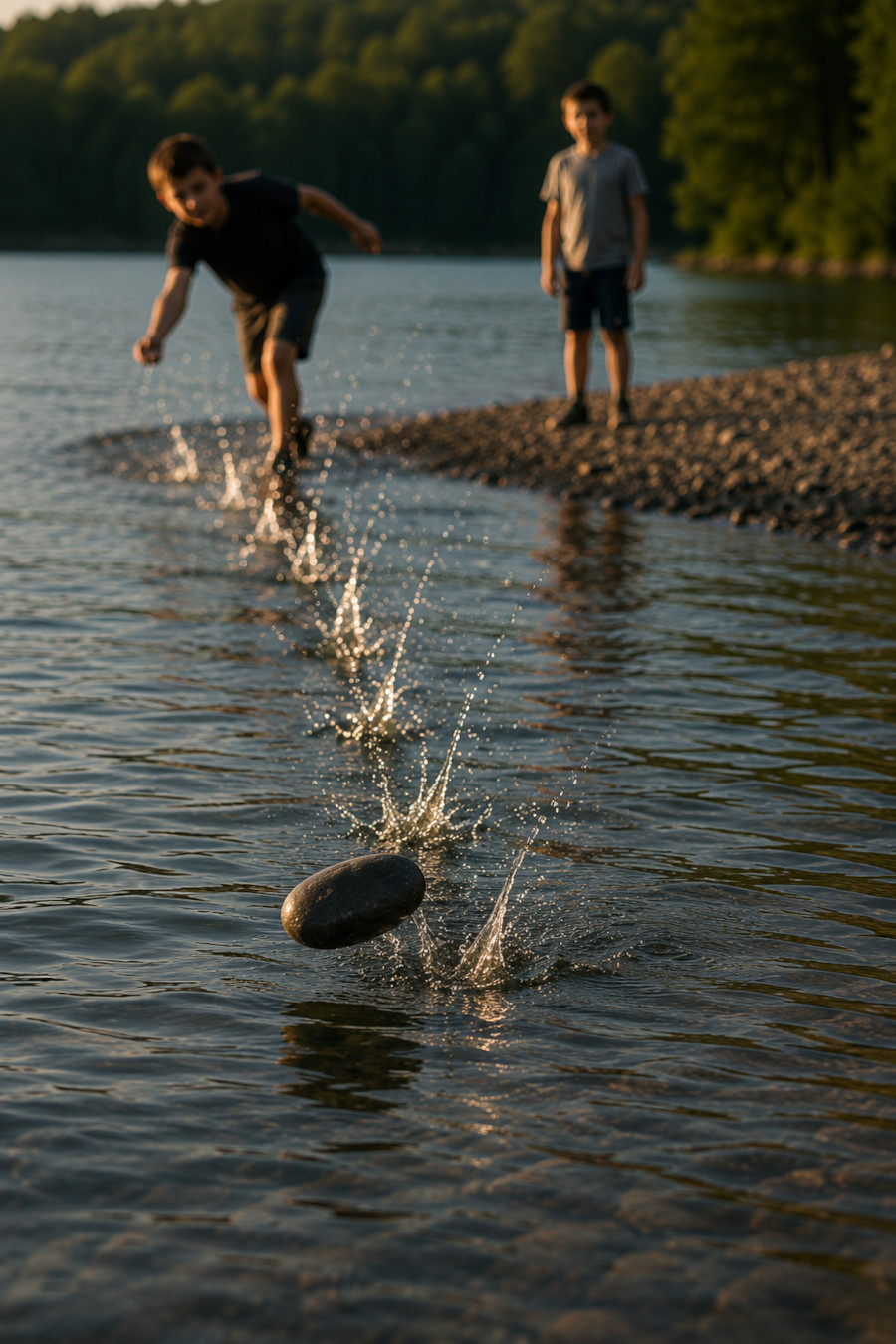
That is the flick forehand. Exactly. The same finger push. The same wrist snap. The same sidearm release angle. Throwing a baseball sidearm or inside out uses the same motion too. If you have done any of those things, your body already has a head start on the flick.
The difference with the lying on your back drills is that instead of skipping the rock across water, you are skipping the disc up into the air. Same mechanics, different direction. And because you are lying down, you get to repeat it hundreds of times without moving from the spot.
Use Different Disc Weights
The UltraStar Soft disc is important for these drills because the disc is coming straight back at your face. You will miss. It will hit you. The soft disc makes that a minor annoyance instead of a painful lesson.
But do not only use the soft disc. You should also train with the standard 175 gram UltraStar because that is the disc you play with in games. And if you really want to push your finger strength, try using a heavier disc. I train with 200 gram discs sometimes. The extra weight means your fingers have to push harder on every rep. It is like adding weight to any exercise. When you go back to the standard disc, it feels light and easy.
Rotate between the three: soft disc when you are learning or doing high rep sessions, standard disc for game feel, heavy disc for strength building.
Drill 1: The Gravity Flick
This is my original drill and the centerpiece of this chapter.
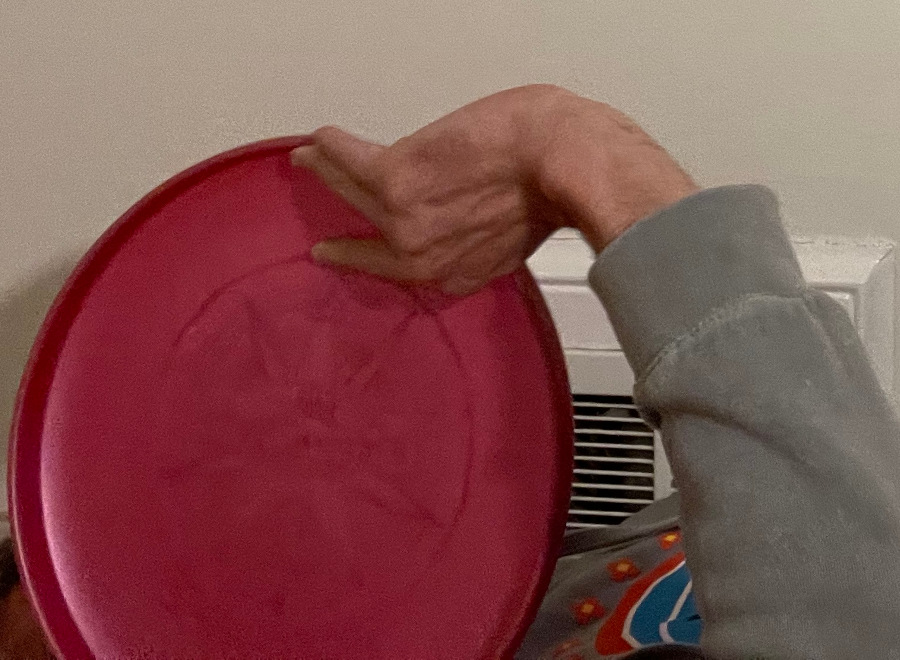
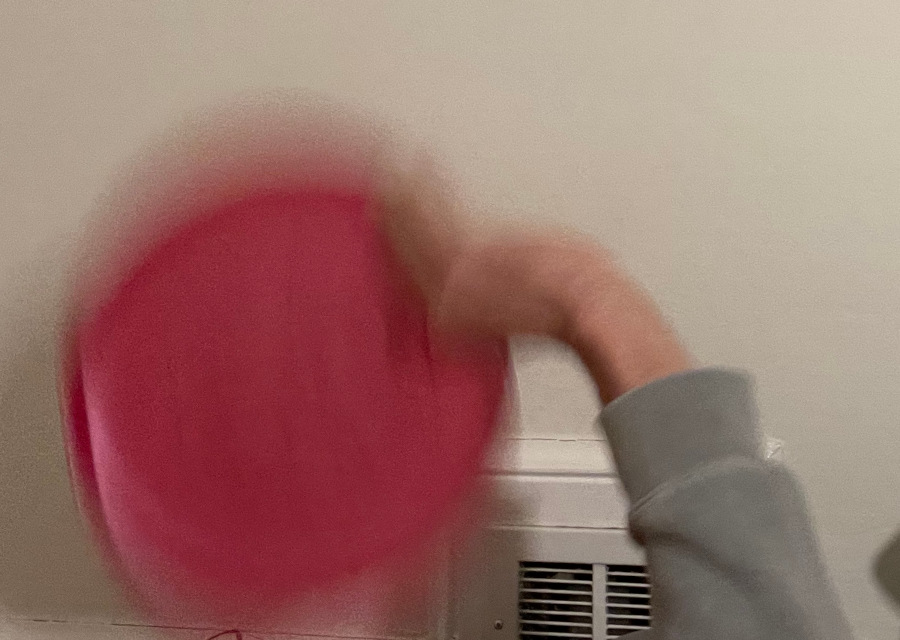
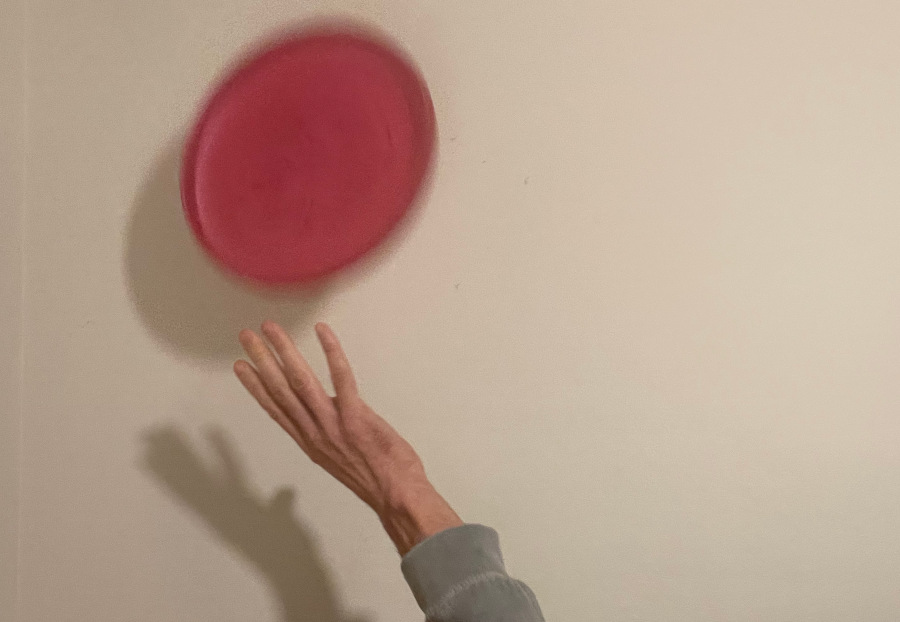
Setup: Lie flat on your back on carpet, grass, or any comfortable surface. Hold the disc in a flick grip above your chest.
The throw: Snap your wrist and push your fingers against the rim to send the disc straight up above your head. The disc should spin fast and fly relatively flat. Start gentle. Do not throw it too hard at first. If you are in your house, you cannot send it too high or it hits the ceiling. In a gym or outside, you can let it fly higher.
The catch: As the disc comes back down, catch it. This sounds simple but the disc will wobble, drift, and fly behind you regularly. You have to stretch and reach for it. Every catch is a real rep of tracking a spinning disc and securing it with your hands.
The focus: Push with your fingers on the rim. Snap your wrist. Get spin. Minimize wobble. You want the disc to go straight up, spin fast, stay flat, and come straight back down. When it wobbles, that tells you your release was off. When it flies to the side, your angle was off. The disc gives you instant feedback on every rep.
The pace: One throw every two to three seconds. Do not rush at first. Get comfortable with the release, the spin, and the catch. As you get more confident, pick up the speed. The goal is a rhythm. Throw, catch, throw, catch, throw, catch. Like breathing.
Progression:
→ 50 reps: learning the motion, finding your release point.
→ 100 reps: getting into a rhythm, starting to feel the finger push.
→ 200 reps: your forearm and fingers will be burning. That is the strengthening happening.
→ 300 reps: a full session. Under 15 minutes. Your flick will be noticeably more controlled afterward.
Do this with your dominant hand first. Then switch to your non dominant hand and do the same progression. Your non dominant hand will feel awkward and uncoordinated at first. That is fine. That is the whole reason you are doing it.
Drill 2: The Push Pass on Back
The push pass is one of the most underrated throws in Ultimate. It is the soft, short range touch pass that scores points near the endzone, delivers the disc to a cutter five feet away, and avoids the speed and risk of a full flick when your teammate is right there.
Setup: Lie on your back. Place your index finger on the rim of the disc. Thumb underneath. Other fingers supporting.
The throw: Push the disc straight up off your index finger, spinning it like a basketball spin. It should float up above your head with a soft, gentle rotation.
The catch: Catch it with the same grip, thumb underneath. The push pass disc will float back down much more softly and floaty compared to the Gravity Flick, which comes down blady and fast. It is a completely different feel. Softer landing, slower descent, more time to read it.
The focus: Zero wobble. You do not want any wobble at all. You want the disc to be perfectly stable and flat, floating up and floating down like a little UFO. If it wobbles, your push was off center or your finger pressure was uneven.
Reps: 100 to 300. Same rhythm as the Gravity Flick but the pace will feel different because the disc hangs in the air longer.
Drill 3: Thumb Throws on Back
This one builds your thumb strength for the thumber throw, which is a powerful overhead option that most players never develop.
Setup: Lie on your back. Hold the disc so that the top plate faces away from your ear (toward the outside) and the bottom of the disc faces toward your ear. Your thumb goes on the rim.
The throw: Push the rim up with your thumb. The disc travels up above your head with a different spin and trajectory than the flick or push pass. Catch it with the same grip.
The feel: This is the least common of the three lying down drills, but it rounds out your overhead throw arsenal. The thumb push is a different muscle group than the finger push of the flick, and training it from your back isolates the thumb the same way the Gravity Flick isolates your index and middle fingers.
The Catch Transition
Here is something most people do not think about when they practice these drills, and it makes a huge difference.
Pay attention to how you catch the disc. If you catch it with your thumb underneath, you are in a different grip position than if you catch it with your fingers underneath. Each position sets you up for a different throw.
Practice catching it one way, then throw it back up. Then catch it the opposite way, and throw it back up from that new grip position. Get comfortable catching in both orientations.
The real skill here is being able to quickly maneuver the disc in one hand to get it from how you caught it into a striking position to throw it again. Without using two hands. Without stopping. Catch, transition, throw. One fluid motion.
Go slow at first. Be very deliberate about feeling the catch, recognizing your grip position, and then rotating or flipping the disc with one hand to get it ready for the next throw. Over time this becomes instant. You catch the disc and your hand automatically adjusts to a throwing grip before you even think about it. That is the instinct you are building.
In a game, this is the difference between the player who catches and immediately throws a perfect flick, and the player who catches, fumbles the grip with both hands, and gives the defender an extra second to close the gap.
The Dual Disc Challenge
You have truly mastered these lying on your back drills when you can do this.
Hold a disc in each hand. Throw both up at the same time. Catch both at the same time. Repeat.
Do this 10 times in a row without dropping. Then 20. Then 30.
This sounds simple. It is not. Your dominant hand will be fine. Your non dominant hand will betray you constantly. The discs will collide in the air. You will catch one and drop the other. You will get frustrated.
But when you can throw both discs with both hands up at the same time, catch both, and do it 20 or 30 times without a single drop, something has changed. Your fingers are strong on both sides. Your control is dialed. Your confidence is real. You can put the disc where you want it with the right spin and no wobble from either hand.
That is ambidexterity. And it started on your back, staring at the ceiling, throwing plastic at gravity.
A Challenge for New Players
I have always wanted to run this experiment. Take a brand new player who has never thrown a flick in their life. Have them lie on their back and do the Gravity Flick drill 100 times. Then have them stand up and try to throw a flick to a partner 15 feet away.
I believe the Gravity Flick drill can teach someone the basic flick motion faster than any traditional instruction. Because it removes all the complexity. There is no footwork, no body rotation, no target to aim at, no defender in the way. Just your fingers, your wrist, and gravity. The most stripped down version of the throw possible.
If you are brand new to the flick, try this. 100 Gravity Flicks from your back. Then stand up and throw. See what happens. I think you will surprise yourself.
Wrap Up
◆ Lying on your back drills are the most efficient rep machine in Ultimate. 300 reps in under 15 minutes with zero setup.
◆ The Gravity Flick isolates finger push (50%) and wrist snap (50%) by removing your arm and body from the equation. It is the same motion as skipping a rock.
◆ The Push Pass on Back builds soft touch and control. The disc floats down gently compared to the blady, fast return of the flick.
◆ Thumb Throws on Back strengthen your thumb for the thumber throw. Hold the disc with the top plate facing away from your ear and push the rim up with your thumb.
◆ Train the catch to throw transition deliberately. How you catch determines how fast you can throw next.
◆ Use different disc weights: soft for safety and high reps, standard for game feel, heavy (200g) for strength building.
◆ The Dual Disc Challenge is the mastery test. Both hands, both discs, 30 reps, zero drops.
Action Steps
→ Right now, lie on your back with a disc and do 50 Gravity Flicks. Just 50. Feel the finger push and wrist snap. Time how long it takes.
→ After the 50 reps, stand up and throw five standing flicks at a wall or target 10 to 15 feet away. Notice how your fingers feel.
→ This week, work up to 100 Gravity Flicks per session, then 200. Do them with your dominant hand first, then your non dominant hand.
→ Try the Push Pass on Back for 50 reps. Focus on zero wobble. Notice how different the disc feels floating down compared to the flick.
→ Once you are comfortable with single disc reps, grab a second disc and attempt the Dual Disc Challenge. Even getting three in a row is a great start.
Mentor's Closing
There is something almost meditative about lying on your back and throwing a disc at the sky over and over. The rhythm of it. Throw, catch. Throw, catch. Your fingers get stronger. Your wrist gets faster. Your catches get cleaner. And the rest of the world fades out for a few minutes.
Gravity never takes a day off. It never cancels on you. It never shows up late. It is the most reliable training partner you will ever have. Use it.
300 reps. Both hands. Every day. Your flick will never be the same. :)