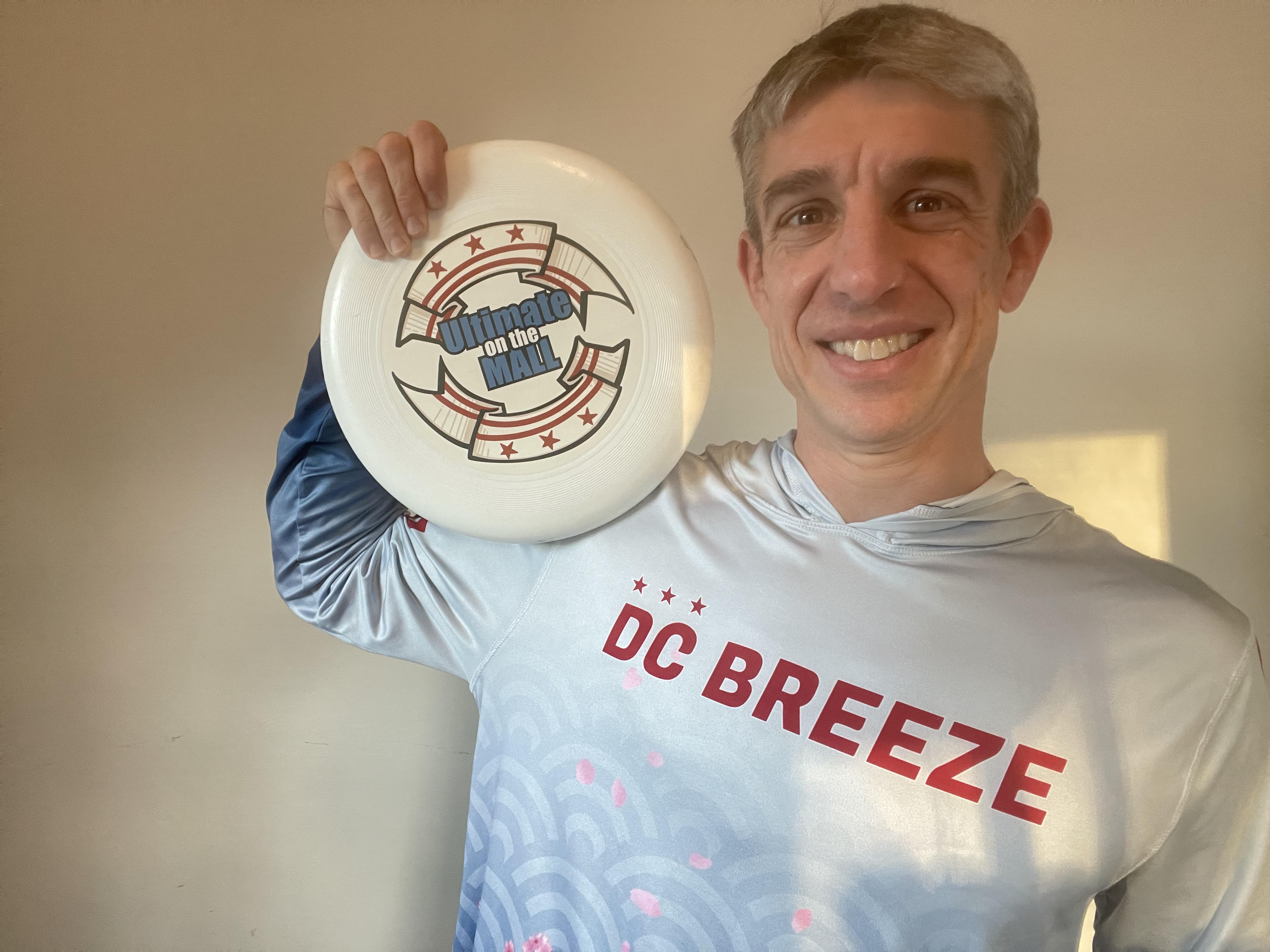
I have never found a sport that I love as much as Ultimate Frisbee.
The people. The athleticism. The fact that you can play for decades without destroying your body. The way it scratches every competitive itch while building genuine friendships. The feeling of chasing plastic through the air on a Sunday morning at Nolte with people who have become family.
This sport has given me so much. And I want it to be around for my grandchildren to discover.
But here is the truth I have learned from twenty years of playing: most people have no idea this sport exists. When I am out walking with my kids and strike up a conversation with strangers, about 80 to 90% have never heard of it. The few who have usually confuse it with disc golf. The people who know Ultimate are dedicated and passionate. But they are a tiny fraction of the population.
The future of this sport depends on solving this awareness problem.
The Numbers: Where We Stand Today
Global participation: The World Flying Disc Federation tracks about 175,000 active, dues paying players worldwide. That number recovered strongly after the pandemic, growing 12.6% from 2023 to 2024. Ultimate is played competitively in over 100 countries, with 126 member associations across 122 countries belonging to WFDF.
United States participation: USA Ultimate has over 63,000 members as of 2025. More than 18,000 student athletes compete on 800+ college teams. Over 600 registered club division teams compete in adult leagues. Youth membership declined 18.9% during the pandemic and is still recovering.
The big picture: The sport fully recovered from pandemic lows. Mature markets like the US, Canada, and UK have stabilized. Emerging markets like China, Colombia, and Belgium are growing rapidly. China's total reported players exploded from 4,500 to over 53,000 in a single year.
The Olympic Dream That Did Not Happen
In 2022, Ultimate Frisbee was officially dropped from consideration for the Los Angeles 2028 Olympics. This was devastating for the sport's leadership. They had been working toward Olympic inclusion for years. It was supposed to be the catalyst that would bring Ultimate to mainstream awareness.
Why Ultimate was not selected: the sport lagged in developing commercial sponsor interest, it lacked a broad enough spectator base, and the grassroots foundations were not strong enough. The IOC wanted to see the growth first.
This failure forced a complete strategic reset. And honestly? It might have been the best thing that could have happened. Because it redirected attention to where it should have been all along: youth development.
The Pivot That Will Define the Next Decade
Both the global federation and USA Ultimate have completely reoriented their strategies. The new unanimous priority? Youth development.
WFDF's 2023 to 2028 strategic plan puts "supporting member associations in promoting youth development as path to growth" as their first goal. USA Ultimate's 2024 to 2026 plan identifies youth growth as the "top priority to receive increased resources and attention," with new programs targeting elementary aged children, expanded middle and high school opportunities, and investment in youth coaching.
This is exactly the right move. The old "college out" model is broken. The pipeline used to flow naturally: players discovered Ultimate in college, then played adult club after graduation. But if youth are not learning the sport before college, that pipeline dries up.
The new model is "youth in." Build the foundation at elementary and middle school. Let those players strengthen in high school. Send a prepared, experienced cohort to college. Graduate them into lifelong club and masters participation.
My Theory: Get Discs Into More Hands
Here is what I believe will actually grow this sport.
The biggest organizations have focused on tournaments, leagues, and elite competition. Those things matter. But they are not how you create new players from scratch. You create new players by putting a disc in someone's hands and letting them throw it.
What I dream about: sending packages of discs to every elementary school in the country. Soft foam discs for the youngest kids who might be scared of hard plastic. Regular discs for older students ready to learn real throws. Simple instruction cards that teach the basics. A QR code under every disc linking to directions on how to play Ultimate Frisbee and disc golf. Every PE teacher having a box of frisbees for their program. Every afterschool program having discs available at recess.
None of this exists at scale. Not even many of the Maryland high schools have Ultimate Frisbee programs. The infrastructure simply is not there.
I wish there was a disc manufacturer in the world that would partner with me to create a disc that is slightly softer than the current Discraft "Soft" UltraStar and give me 50,000 of them to distribute to middle schools across the world. Most kids I talk to have never thrown a standard Ultimate disc and do not have access to a single disc anywhere. Not one. This to me is the most important catalyst to getting youth to become frisbee players.
Why this will work: discs are fun to play with, especially if they do not hurt, are not noisy, and you can skip them across the concrete or floor without scuffing anything. Kids will naturally see other kids playing with one and ask about it. It does not break or scuff or hurt. Try to break it, then try to throw it to a friend. Try to catch it. Catching is pretty easy, especially for athletic kids who can already catch a ball.
Kids will pick the disc up. Adults will too. They will ask what it is called, what to do with it, where they could get their own for their family. This is a business I would like to create someday when there is time.
Why the Flick Is the Gateway
If you can teach somebody how to throw the flick, you have them hooked.
The flick is the coolest, most magical throw in the sport. When you finally get it to fly flat and far, you feel like you have accomplished something special. There is a moment of pure joy when that disc sails out of your hand with spin and control for the first time.
I believe there are tricks to learning the flick quickly. The flick trick quick, if you will. And if we can get that knowledge into the hands of PE teachers, coaches, and parents, we can create thousands of new players.
A kid who has already touched a disc and learned to throw it has a massive advantage when they show up to try the sport. They can step in and contribute immediately. That early success keeps them coming back.
The Growth Happening Right Now
China: the explosive growth story. Total reported players jumped from 4,500 to over 53,000 in one year, a 3,460% increase. COVID lockdowns created demand for accessible, outdoor, social activities. Ultimate was promoted as a "trendy sport" amplified by social media, especially by women posting pictures with discs on Instagram. The 2025 World Games in Chengdu provided a massive focal point.
Colombia: the South American leader. 19.9% growth from 2022 to 2023. Ranks 8th in the world. One of the fastest growing markets globally. Building a strong pipeline from youth to elite.
Belgium: the small country model. 16.8% growth despite being a mature European market. Population of only 11 million people. Strong youth scene and club structure. Proving that deliberate youth development works.
These markets are growing because they are doing the grassroots work. They are getting discs into hands. They are building youth programs. They are creating the bottom up foundation that Olympic inclusion alone could never provide.
The Five Year Forecast
Based on the data and strategic shifts, here is what experts project for 2026 to 2030.
Global: Projected 7 to 9% compound annual growth rate. Global active members could reach 263,000 to 295,000 by 2030. Mature markets expected to grow 4 to 6% annually. High growth markets expected to grow 10 to 15% annually.
United States: Starting from approximately 63,000 members in 2025. Projected 5 to 7% annual growth. Could reach approximately 82,500 active members by 2030. Growth depends entirely on execution of youth development strategies.
China: Total participant base could exceed 130,000 by 2030. The social trend that sparked growth shows no signs of slowing.
The Female Participation Challenge
One critical headwind deserves attention. Women remain a minority at approximately 35% of total players globally. Some markets have imbalances as high as 79% male. The pandemic disproportionately harmed female participation.
Why this matters beyond equity: the sport's most unique format is mixed gender competition. Mixed gender was the proposed format for Olympic consideration. Failure to solve the female participation decline hurts both growth and Olympic aspirations. A sport that only appeals to half the population has a built in ceiling.
→ Action Step: If you coach or organize Ultimate, make deliberate efforts to recruit and retain female players. The health of the entire sport depends on solving this challenge.
What You Can Do
If you are a player: Bring a disc to every family gathering and teach someone to throw. Be the person who introduces Ultimate to your neighborhood.
If you are a parent: Ask your child's school if they have Ultimate Frisbee equipment. Offer to donate discs if they do not. Organize informal throwing sessions with other families.
If you are a coach or organizer: Make youth development your top priority. Remove financial barriers wherever possible. Create welcoming environments for beginners, especially girls. Build relationships with schools and PE teachers.
If you are anyone who loves this sport: Talk about it whenever the opportunity arises. Correct people when they confuse it with disc golf. Share highlight videos on social media. Be an ambassador for the game.
Wrap Up
◆ Most people, 80 to 90% of strangers I talk to, have never heard of Ultimate Frisbee. Awareness is the sport's biggest challenge.
◆ The Olympic omission in 2022 forced a strategic reset toward youth development, which may be the best thing that could have happened.
◆ Getting discs into more hands is the simplest, most effective growth strategy. Most kids have never touched an Ultimate disc.
◆ The flick is the gateway throw. Teach someone the flick and you have them hooked.
◆ China, Colombia, and Belgium are proving that grassroots youth development works.
◆ Female participation at 35% globally is a critical headwind. Mixed gender is the sport's most unique format and needs more women.
◆ The new model is "youth in," not "college out." Build the foundation early and the pipeline fills itself.
Mentor's Closing
I imagine a world where every elementary school has a box of frisbees.
Where PE teachers know how to teach the flick and the backhand. Where kids grow up throwing discs at recess and discover that there is actually a competitive team sport waiting for them. Where the question "have you heard of Ultimate Frisbee?" gets a "yes" instead of a blank stare.
I imagine a world where my grandchildren can walk onto a field at Nolte, just like I do every Sunday, and find a community of people who love this sport as much as I do.
That world does not build itself. It requires all of us, every player who has ever felt the joy of a perfect catch or a throw that sailed exactly where you wanted it to go, to share this gift with others.
The data says we are at a turning point. The pandemic recovery is complete. The easy growth is over. Now the real work begins.
Building from the bottom up. One disc in one hand at a time. :)