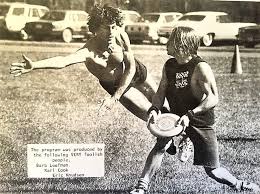
The legendary sports broadcaster Howard Cosell once called Ultimate Frisbee "a refreshing reminder of what sport was meant to be, and still, on rare occasions, can be." He said that in the 1980s. And it is still true today.
Before you can become a Legend, you need to know where this sport came from. Not just the dates and names, though we will cover those, but the spirit that animated it from day one. Because Ultimate Frisbee is the only major sport in history where the culture was invented at the exact same moment as the game itself.
This is the story of pie tins and parking lots, intensity and inclusion, honor systems and evolution. It is the story of how a bunch of high school kids playing under streetlights created something that would eventually spread to over 100 countries. Not through marketing campaigns or corporate sponsorships, but through one player teaching another, one throw at a time.
The Disc Before the Sport
The flying disc has a longer history than most people realize. It started, of all places, with pie.
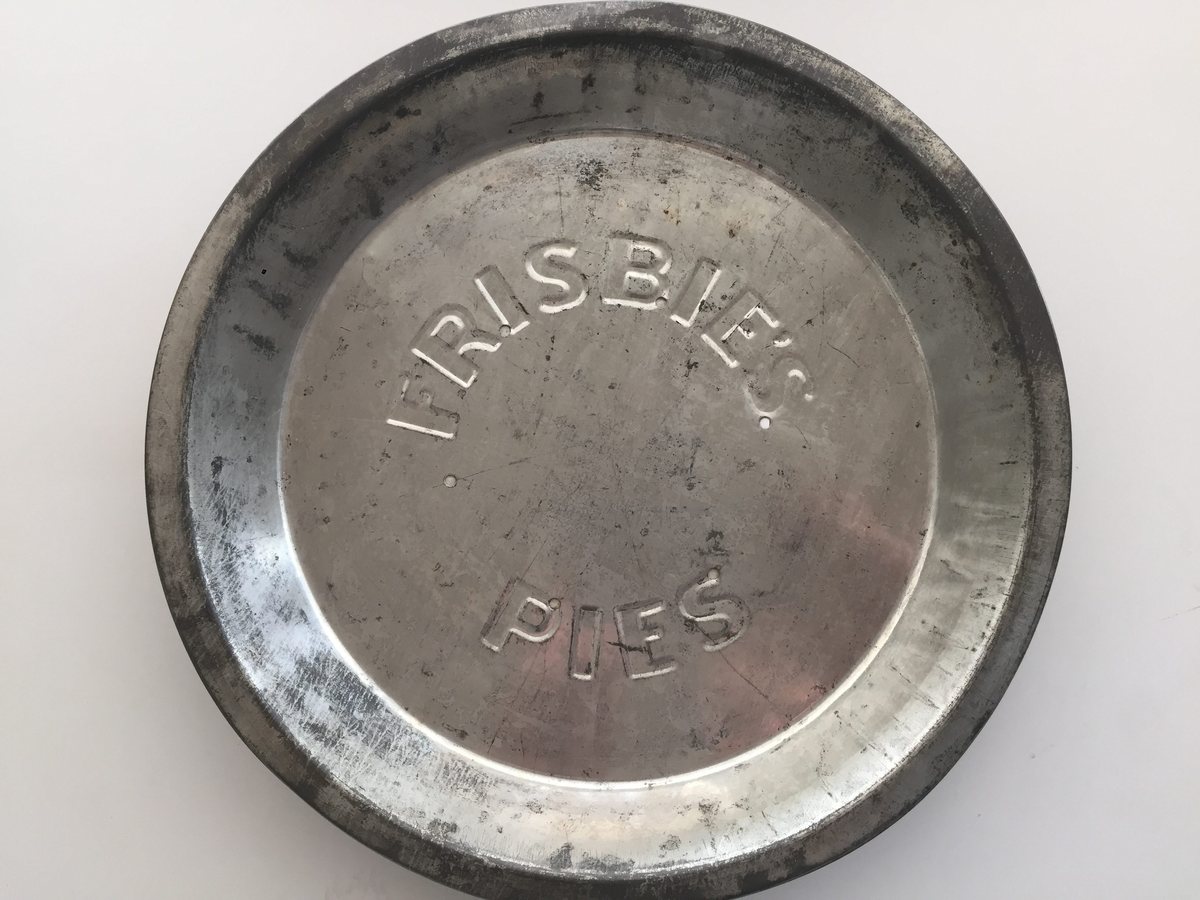
In the 1870s, the William Frisbie Pie Company opened in Bridgeport, Connecticut, selling pies in lightweight tin plates. Legend has it that Yale University students discovered these empty pie tins made excellent throwing toys. As they flung them across campus, they yelled "Frisbie!" to warn passersby of the incoming metal disc.
Think about that. The very first recorded instance of Spirit of the Game was not even part of a game yet. It was just kids giving each other a heads up so nobody got beaned by a pie tin. Respect. Communication. Looking out for each other. Spirit was there from the beginning.
Fast forward to 1937. A 17 year old California teenager named Fred Morrison is tossing a popcorn can lid with his girlfriend Lucile on a Santa Monica beach. Someone walking by offers them 25 cents for the cake pan they are throwing. Morrison later recalled: "That got the wheels turning, because you could buy a cake pan for five cents, and if people on the beach were willing to pay a quarter for it, well, there was a business."
World War II interrupted Morrison's disc dreams. He served as a P 47 Thunderbolt pilot, learning aerodynamics firsthand while dodging enemy fire over Europe. He was shot down over Italy and spent 48 days as a prisoner of war. That wartime experience, watching planes bank and turn, understanding lift and drag and stability, would later inform every disc he designed.
In 1948, Morrison created the first commercial plastic flying disc, called the "Flying Saucer," capitalizing on the post war UFO craze. By 1955, he and his wife Lu had refined it into the "Pluto Platter," the archetype of all modern flying discs.
On January 23, 1957, Morrison sold the rights to Wham O Manufacturing Company. When Wham O president Rich Knerr learned that college students in the Northeast were calling it a "Frisbee" after those Yale pie tins, he changed the name. Morrison himself hated it. "I thought the name was a horror. Terrible." Then the royalties arrived. Wham O sold over 100 million Frisbees by the mid 1960s, and Morrison stopped complaining.
But a flying disc is just a toy. People had been throwing them at beaches and parks for years. It took a specific group of people at a specific moment in history to turn it into something more.
The Parking Lot Revolution
1968 was a tumultuous year for America. Martin Luther King Jr. and Bobby Kennedy were assassinated. The Vietnam War raged. Protests filled the streets. Young people were questioning everything.
In Maplewood, New Jersey, at Columbia High School, a counterculture experiment was about to begin.
Joel Silver, a junior, had spent the summer of 1968 at Mount Hermon School in Massachusetts. There, a college student named Jared Kass taught him a Frisbee game that Kass and his friends at Amherst College had been developing since 1965 or 1966. It combined elements of football, basketball, and soccer, but with one crucial difference. No referees. Players called their own fouls.
Kass later recalled the moment he knew this game was special: "I just remember one time running for a pass and leaping up in the air and just feeling the Frisbee making it into my hand and feeling the perfect synchrony and the joy of the moment, and as I landed I said to myself, 'This is the ultimate game.'"
That fall, Silver brought the game back to Columbia High School. At a student council meeting, in the middle of the counterculture chaos of 1968, he raised his hand and said: "I'd like to move that we have a committee to investigate the possibility of bringing Frisbee into the high school curriculum."
It was a joke. A kid being a smartass. But the student council said yes. They approved it. They gave him a committee.
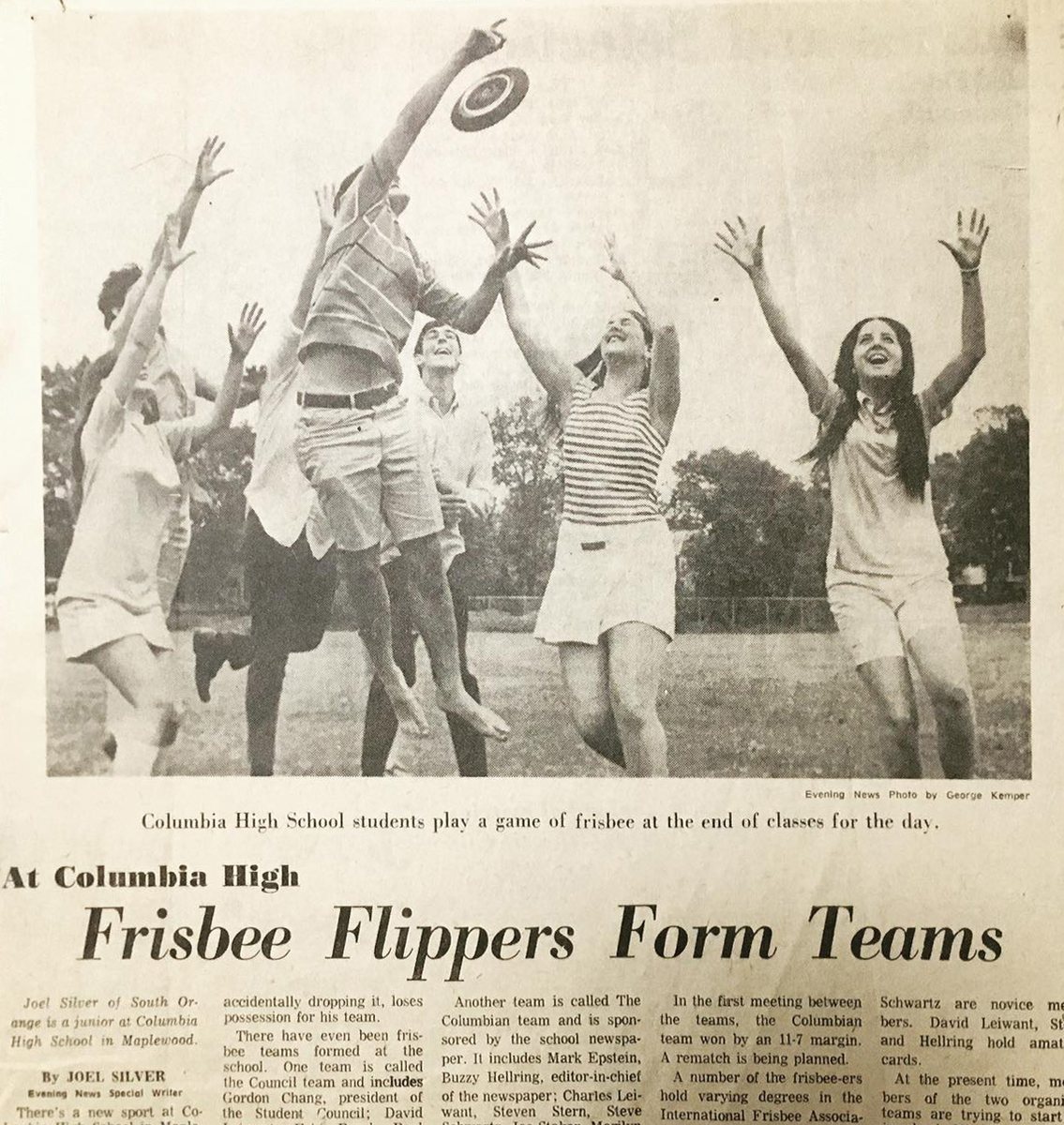
The school had just built a new parking lot, lit at night with mercury vapor lights. Silver and his friends, Bernard "Buzzy" Hellring and Jonny Hines, would gather there after school, refining the rules, playing under those lights, creating something entirely new.
Silver's friend initially called it "Speed Frisbee." Silver shot that down immediately: "You can't call it 'Speed Frisbee'! That's as dumb as 'Guts Frisbee'! Let's call it 'Ultimate Frisbee.'"
And then he made a prediction that his friends never forgot: "Someday people all over the world will be playing this game." His classmates laughed.
More than fifty years later, millions of people around the world play Ultimate Frisbee. Joel Silver was right.
The Oral Tradition: How Spirit Spread
Here is something fascinating about those early days that most people do not know. Spirit of the Game was not written down in any rulebook. There was no official document saying you must call your own fouls honestly. It was passed along like folklore, player to player, game to game.
Jim Lovell, who co founded the Yale Ultimate program with Dave Leiwant in the early 1970s, remembers how Spirit worked back then: "It was very much an oral tradition. The honor system was very strong. We didn't have it written down anywhere. You just learned it from the people who taught you the game."
What did that oral tradition teach? No contact. Call your own fouls honestly. Resolve disputes quickly. Get back to playing. Trust your opponent. Compete hard but fair. Make the game better for everyone.
These were not rules. They were cultural DNA, embedded in the sport from day one by kids who believed that competition did not require corruption, that winning did not require cheating, that you could push yourself to the absolute limit while still respecting the person trying to stop you.
Jim Pistrang embodied this Spirit before it even had a name. In the early days of Ultimate, Jim wrote 40 letters to different schools proposing Frisbee teams. Forty letters. He got one response, from Columbia High School. Most people would quit after five rejections. Jim kept going.
Today, Jim still coaches middle school Ultimate in Amherst, Massachusetts, after more than 30 years. His philosophy captures everything that makes this sport special: "It has to be fun, but you also have to work really hard. Those two things are NOT mutually exclusive. The harder you work, the more fun it is, and vice versa."
The Pioneers Who Still Play
I have been fortunate enough to meet and interview some of the original pioneers of this sport.
Jerry Mindes was co captain of the Columbia High School Varsity Frisbee Team in 1971 and 1972. He showed me the original CHS Varsity Frisbee Team brochure, a piece of living history that I was honored to hold in my hands.
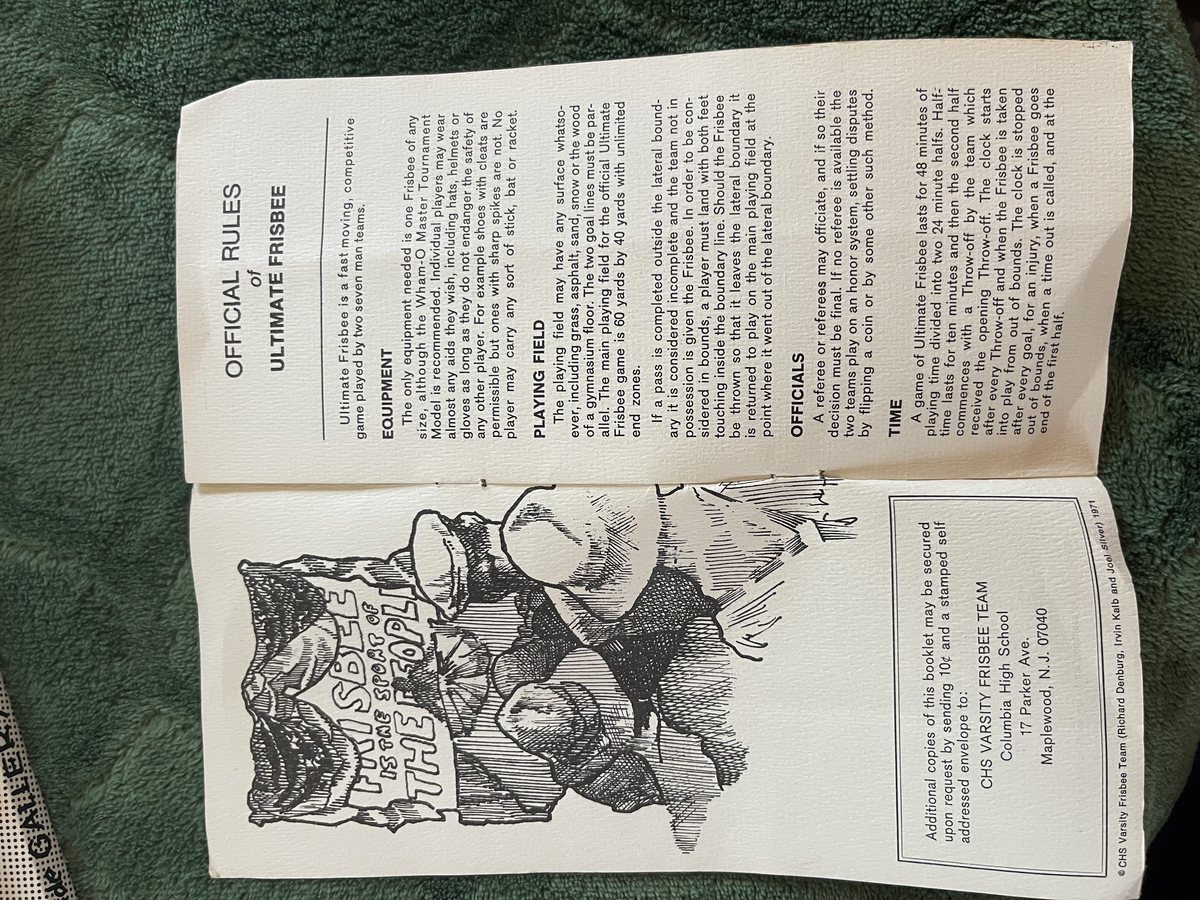
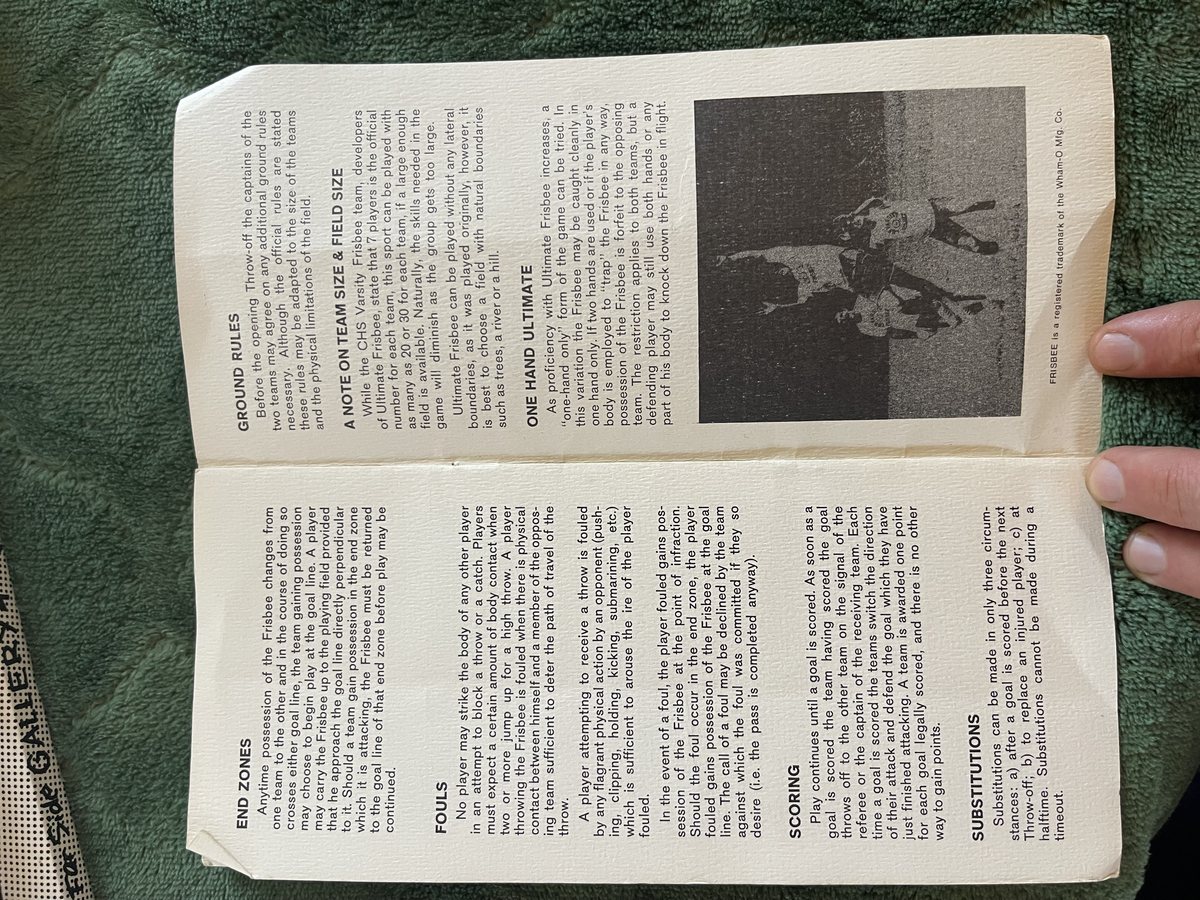
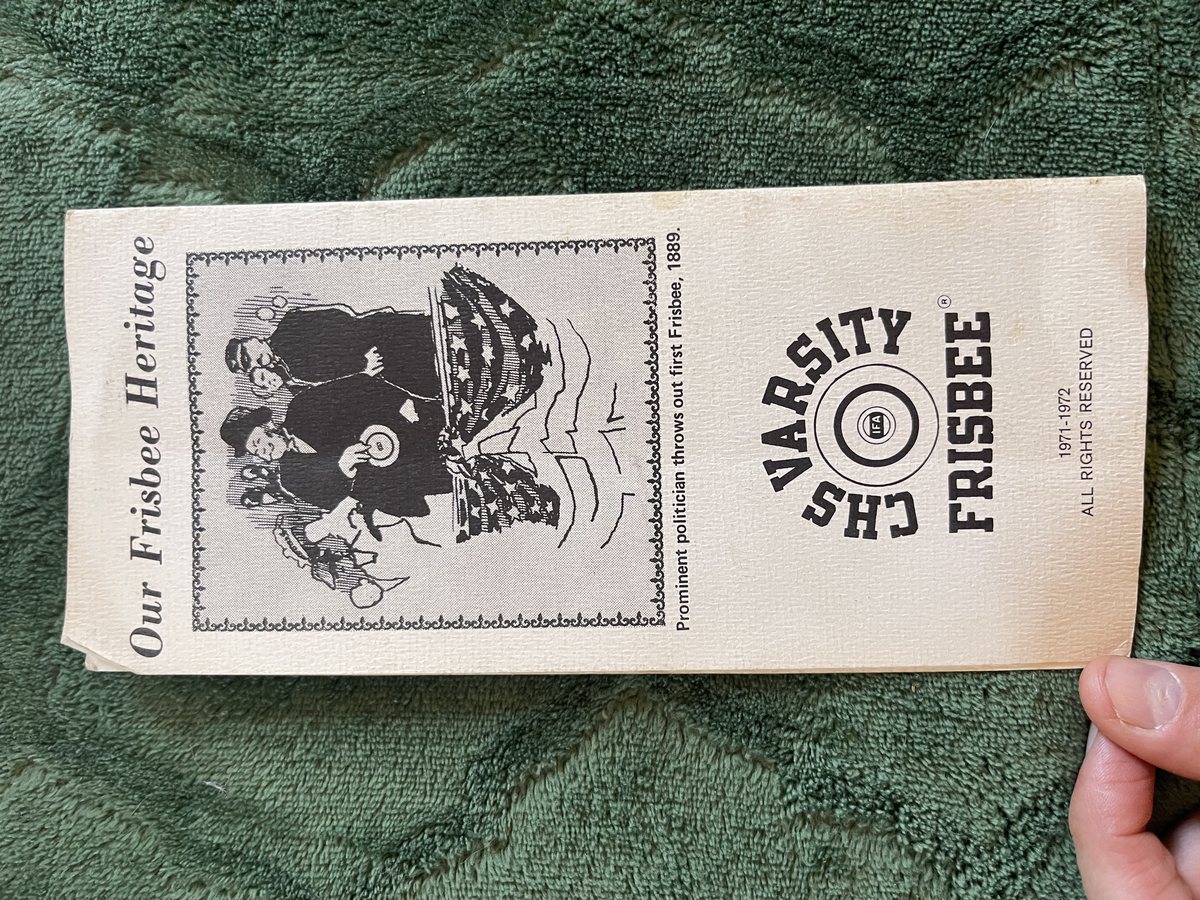
But here is what amazes me most about Jerry: he still plays every Sunday morning at the Nolte pickup game here in the DC area. He is in his 70s now. Still throwing. Still catching. Still using his signature chicken wing catch that nobody else seems to do anymore.
When I watch Jerry play, I am not just watching a guy throw a disc. I am watching a direct connection to those parking lot pioneers. I am watching Spirit personified, someone who has been playing for over 50 years not because he has to, but because he still loves it.
Jerry once told me: "We had no idea what we were starting. We just loved playing. The rules evolved as we figured out what worked and what didn't. Every game was an experiment."
And reflecting on more than 50 years of throwing: "The game is the same, but it's always different. New people, new challenges, new weather. And the feeling when you make a great catch or throw, that never gets old. I felt it in that parking lot in 1968, and I still feel it today."
That is what Legend status looks like. Not trophies. Not championships. Just pure, sustained love for the game across decades of your life.
→ Action Step: Find out if any Ultimate pioneers play in your area. Their stories and wisdom are invaluable, and they are usually thrilled to share them.
From Parking Lot to Planet
The sport grew quickly once it left that Columbia High School parking lot.
The early years (1970 to 1975): In 1970, Silver, Hellring, and Hines wrote the first official rules and created the Columbia High School Varsity Frisbee Squad. On November 7, 1970, the first interscholastic Ultimate game took place. Columbia High School defeated Millburn High School 43 to 10.
Then came November 6, 1972, a date every Ultimate player should know. Rutgers University faced Princeton University in the first ever intercollegiate Ultimate Frisbee game. Rutgers won 29 to 27. The timing was no accident. It was played exactly 103 years after the first American college football game, which was also between Rutgers and Princeton on the same grounds. Rutgers won that one too, by the very same two point margin.
Going global (1974 to 1979): By 1974, the Swedish Frisbee Federation formed, the first national flying disc organization outside North America. In April 1975, Yale hosted the first organized Ultimate tournament. Eight college teams competed, and Rutgers won again.
In January 1977, Wham O introduced the World Class "80 Mold" 165 gram Frisbee. This heavier, more stable disc revolutionized play. Suddenly throws like the flick and hammer were possible with greater control and accuracy.
In 1979, Tom "TK" Kennedy established the Ultimate Players Association, the first national player run Ultimate organization. The first UPA Nationals were held in State College, Pennsylvania. TK was inducted into the inaugural class of the Ultimate Hall of Fame in 2004.
Building the foundation (1980 to 1985): In 1980, the first Ultimate European Championship was held in Paris. In 1981, the Women's Division was added to UPA Nationals, a crucial moment that cemented Ultimate's commitment to co ed competition. In 1982, Irv Kalb and TK Kennedy published "Ultimate: Fundamentals of the Sport," the first ever book about the game. And in 1985, the World Flying Disc Federation was formed in Helsingborg, Sweden.
The sport that started as a joke at a student council meeting now had international structure. But that structure was built by players, for players. Not corporations. Not sponsors. Players.
The Dynasty Years: When Spirit Meant Intensity First
If you want to understand how Spirit of the Game evolved, you need to understand New York New York.
From the late 1980s through the early 1990s, this team dominated Ultimate in ways that have never been replicated. Six U.S. National Championships from 1988 to 1994. Five World Championships. They did not just win. They obliterated opponents.
At the heart of that dynasty was Kenny Dobyns. His philosophy was simple and fierce: "What I did by playing hard and practicing hard and demanding the most of myself all the time was set the standard for a higher level of commitment, so that when I demanded that same level from the other players on the team they had no choice but to comply."
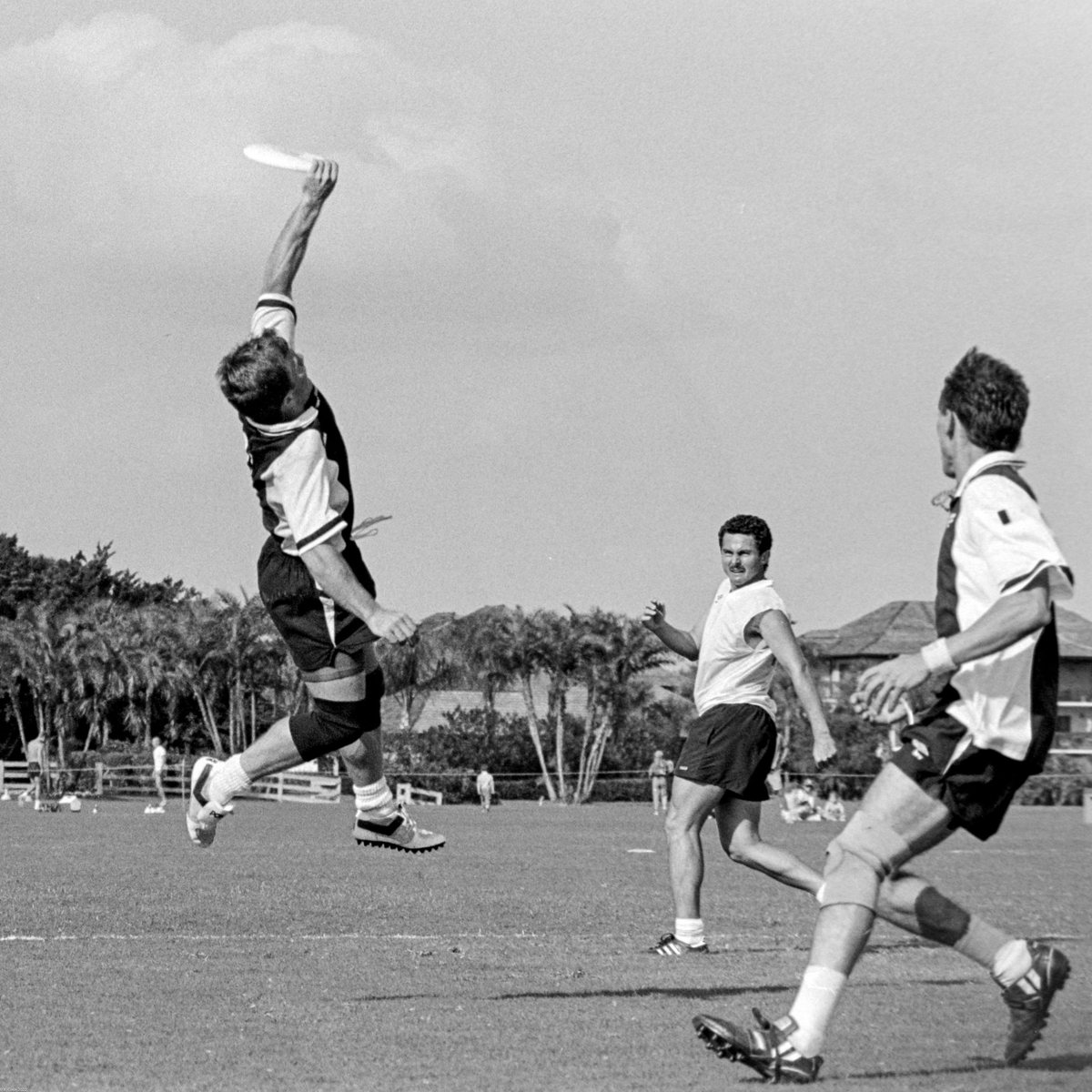
In the 1980s and early 1990s, Spirit of the Game meant something fundamentally different than it does today. Spirit meant intensity. It meant winning at all costs while staying within the rules. It meant pushing boundaries, testing opponents mentally and physically, and refusing to give an inch.
New York New York took this to extremes that would shock modern players. Team members would go weeks without bathing before tournaments. They would spit in opponents' faces to show dominance. They played with a ferocity that bordered on intimidation, all while technically following the no contact rule.
I am not endorsing these tactics. I am explaining the history. Because if we do not understand where Spirit came from, including its darkest chapters, we cannot fully appreciate how far it has evolved.
The sport kept growing through this era. In 1998, the Mixed Division was added to UPA Nationals. In 2001, Ultimate debuted at the World Games. And in 2010, the Ultimate Players Association rebranded as USA Ultimate, signaling a new era of professionalism.
How Spirit Evolved: From Intensity to Inclusion
Seth Martin, who still dominates in the Great Grand Masters division, has watched Spirit transform over the years. When I asked him what Spirit means today, he put it simply: "Spirit is about being a good sport. Are you treating your opponents with respect? Are you playing hard but fair? Are you someone others want to compete against?"
That is a very different definition than Kenny Dobyns would have given in 1989. And that is the point. Spirit has grown up alongside the sport.
What modern Spirit emphasizes:
- Competition AND community — not competition instead of community. You can want to win desperately and still treat your opponents with dignity.
- Inclusion of all skill levels — pickup games welcome beginners. Tournaments have divisions for every level.
- Welcoming new players — the best Ultimate communities are ones where a nervous newcomer becomes a confident regular within weeks.
- Self improvement through honest play — you get better by pushing yourself, not by breaking your opponent's spirit.
- Long term sustainability — if you drive people away with toxic behavior, there is no sport left to play.
You can still be intense and play with modern Spirit. You can still want to win desperately. But the balance has shifted. The culture has matured. The sport has opened its arms wider.
The Professional Era
For decades, Ultimate remained proudly amateur. Players paid their own travel, slept on floors before tournaments, and balanced their passion with day jobs.
Then on April 14, 2012, the American Ultimate Disc League played its first professional game. The Connecticut Constitution defeated the Rhode Island Rampage 29 to 23. Professional Ultimate had arrived. And it brought something controversial: referees.
For the first time in Ultimate's history, players were not calling their own fouls. This sparked intense debate. What does Spirit mean when the honor system is removed?
The answer, most players agree, is that Spirit survives in a different form. Pro players still shake hands. They still respect each other. They still build community. The mechanism changed, but the underlying values remain.
Along the way the pro game opened new doors. In 2015, Jessi Jones of the Raleigh Flyers became the first woman to play in a league game. In 2017, Jesse Shofner became the first woman on a full season roster with the Nashville Nightwatch. In January 2024, the league rebranded as the Ultimate Frisbee Association through a partnership with the owner of the Wham O and Frisbee trademarks, and today it fields around two dozen professional teams across North America.

A Global Phenomenon
Remember Joel Silver's prediction? "Someday people all over the world will be playing this game."
Today, Ultimate is played competitively in over 100 countries, and the World Flying Disc Federation counts well over a hundred member associations across six continents. Millions play in the United States alone, and millions more around the world. The 2024 World Ultimate Championships gathered more than twenty nations in Australia, with the United States sweeping all three divisions.
The Olympic Dream
The Ultimate community has long dreamed of Olympic inclusion. Not just for glory, but for legitimacy and the resources that would flow to youth programs, college teams, and grassroots organizations worldwide.
In May 2013, under the leadership of WFDF President Robert "Nob" Rauch, WFDF received provisional recognition from the International Olympic Committee. On August 2, 2015, the IOC granted WFDF full recognition.
WFDF developed "Ultimate 4s," a four on four mixed gender format designed specifically for Olympic consideration. Fast paced, athletic, emphasizing gender equality. Everything the Olympics claims to value.
Ultimate was not selected for the Los Angeles 2028 Olympics. Rauch responded with grace and determination, noting that flying disc sports are actively practiced on a competitive level in over 100 countries and appeared to satisfy all objective criteria.
The next target is Brisbane 2032. The dream continues, carried forward by the same Spirit that started in a New Jersey parking lot.
The Varsity Revolution
For decades, college Ultimate existed in a strange middle ground. Teams competed at the highest levels and traveled to national championships, but were classified as club sports. Players paid their own way. They fundraised for jerseys. It was the parking lot all over again.
That changed when two universities took a chance on Ultimate.
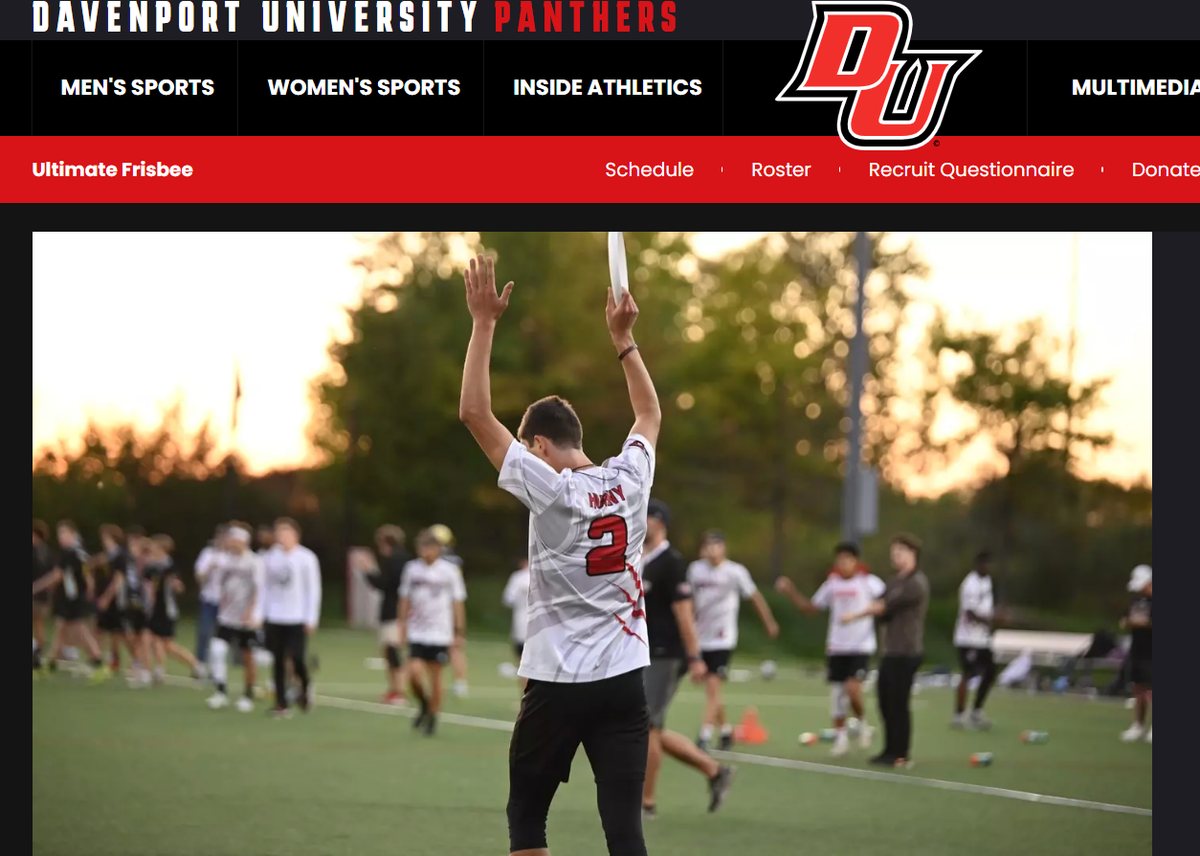
Oklahoma Christian University established Ultimate as a club sport within the athletic department and began offering athletic scholarships. Within just a couple of years of founding the program, they won a Division III National Championship, then repeated as champions the following year.
Davenport University in Grand Rapids, Michigan, went further, becoming the first program in history to offer scholarships for a women's Ultimate team. Head coach Mike Zaagman declared: "We are thrilled to make Davenport University the envy of every Ultimate Frisbee program in the country."
This shift represents one of the most significant developments in Ultimate's history since the founding of the UPA in 1979. For the first time, talented players can pursue their Ultimate dreams with the same institutional support that basketball, soccer, and football players receive.
The grassroots sport born in a parking lot is growing up. And the Spirit that was passed along through oral tradition is now being formalized in university athletic departments. Evolution, not extinction.
The World Games: USA on Top
Every four years, the world's best flying disc athletes gather at The World Games, the premier stage for sports outside the Olympic program. It is the closest thing Ultimate has to an Olympic moment, and it is where you see just how far this parking lot game has traveled.

At the 2025 World Games in Chengdu, China, the format was mixed gender Ultimate, men and women competing together on the same field, exactly the co ed spirit the sport has championed since that Women's Division was added back in 1981. Eight nations qualified, and the level of play was breathtaking.
The final was a classic. The United States faced Canada, the two North American rivals, in a back and forth battle that came all the way down to universe point, the sudden death final score. Canada pushed harder than they ever had, and for stretches it looked like the Americans might finally be caught. But the USA dug in on defense at the very end, forced one last turnover, and punched in the winner to take gold, 13 to 12.
It was the sixth straight World Games title for the USA mixed team, an incredible run of dominance. And the way they did it, leaning on preparation, trust, and depth rather than any single superstar, is a lesson for every team. As one of the players put it afterward, it felt like every single person had a big moment somewhere along the way. That is what team cohesion looks like at the highest level.
Wrap Up
◆ The flying disc evolved from Yale students throwing Frisbie pie tins to Fred Morrison's Pluto Platter to the modern UltraStar, each step building on the last.
◆ Ultimate was born at Columbia High School in 1968, not by corporations, but by kids in a parking lot under streetlights.
◆ Spirit of the Game was an oral tradition from the beginning, passed player to player, creating a culture of honor and self officiation.
◆ Pioneers like Jerry Mindes, Jim Pistrang, Tom Kennedy, and Joel Silver built the sport through persistence, passion, and grassroots organizing, and many still play today.
◆ Spirit has evolved dramatically. The 1980s NYNY dynasty emphasized intensity first. Modern Spirit balances fierce competition with inclusion and community.
◆ The sport grew from parking lot games to millions of players in over 100 countries, all connected by the same grassroots Spirit.
◆ Professional Ultimate arrived in 2012, and Team USA continues to dominate on the world stage, including a sixth straight World Games gold in 2025.
◆ The varsity revolution at Oklahoma Christian and Davenport shows Spirit evolving into institutional settings while maintaining core values.
You now know where this sport came from. You know about Fred Morrison tossing cake pans on Santa Monica beach and turning a five cent product into a hundred million dollar industry. You know about Jared Kass leaping for that catch and thinking "This is the ultimate game." You know about Joel Silver's joke that changed everything.
You know about Jerry Mindes still playing every Sunday at Nolte, more than fifty years after he started. You know about Jim Pistrang writing 40 letters and getting one response, then coaching middle school for 30 years because he believed in the joy of discovery. And you know that Ultimate spread across the globe not through marketing campaigns, but through players teaching other players, one throw at a time.
Now it is your turn to be part of that history. Every time you step on the field, you are adding to this story. Every time you teach someone their first backhand, you are doing what Jim Pistrang did with those 40 letters. Every time you call a foul honestly, you are honoring the oral tradition that started in 1968 under the mercury vapor lights.
The next chapter of Ultimate's history has not been written yet. And you are holding the disc. :)