The Free 20%
Ryan Morrison is the Head Physical Therapist for a professional soccer team in San Diego. He works with soccer elite athletes every day, and when I asked him what recreational players leave on the table, he did not hesitate. He also is an utterly impossible ultimate frisbee player to guard because he is so quick and can catch anything. He knows both sports inside and out. Trust me!
"If you can get into the gym once a week, do lower body and upper body strength, add rotational exercises and plyometrics, adjust your sleep, take in consistent protein, and limit alcohol," he told me, "that's going to give you 20% like easy."
Twenty percent. For free. Just by taking care of the basics.
Most of what Ryan described does not require a gym, a trainer, or a program. It requires decisions. Small, daily, boring decisions that add up to a massive advantage over time. And every single one of them starts before you ever touch a disc.
This chapter is about preparing your body for solo practice. Not for game day. For the Tuesday afternoon session in your backyard. For the Thursday morning Gravity Flick drill on the carpet. For the Saturday up the wall throws at the school gym. If you build these habits around your solo training, they become automatic. And when game day comes, you are already prepared because this is just how you live. You will create your own routine of solo drills and practice along with fueling your body to thrive during these training moments.
Sleep: The Foundation of Everything
Sleep is where your body repairs itself. The micro tears in your muscles from yesterday's training knit back together while you sleep. The neural pathways you built during your Hula Hoop Drill strengthen while you sleep. The coordination improvements from your wall throws solidify while you sleep. Get good sleep! This doesn't mean you must sleep a lot at night, but rest and take naps in order to enable your body to recover properly.
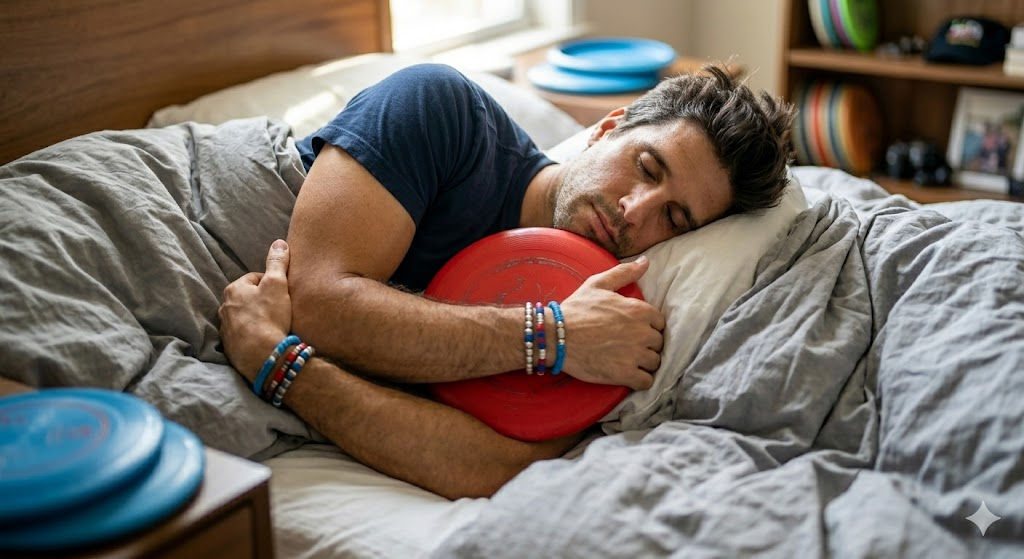
If you cut your sleep short, you are cutting your results short. Every rep you did yesterday becomes less effective because your body did not have enough time to process it and grow from it.
Ryan calls it the Three Night Rule. Prioritize sleep for three consecutive nights before any big physical effort. For solo practice, the principle is simpler: make sleep a priority every night, because you might pick up a disc at any time. I know this might be difficult, but if you take sleep seriously, you will perform at a higher level, guaranteed.
You do not need to overthink this. Go to bed a little earlier. Put the phone down thirty minutes before you want to fall asleep. Aim for seven to eight hours. That is it. The gains from consistent sleep are so large and so easy that it is almost unfair.
Hydration: The Simplest Thing You Will Forget
Before any solo practice session, drink at least two full glasses of water. Not during. Before. Your body needs to be hydrated before you start asking it to perform.
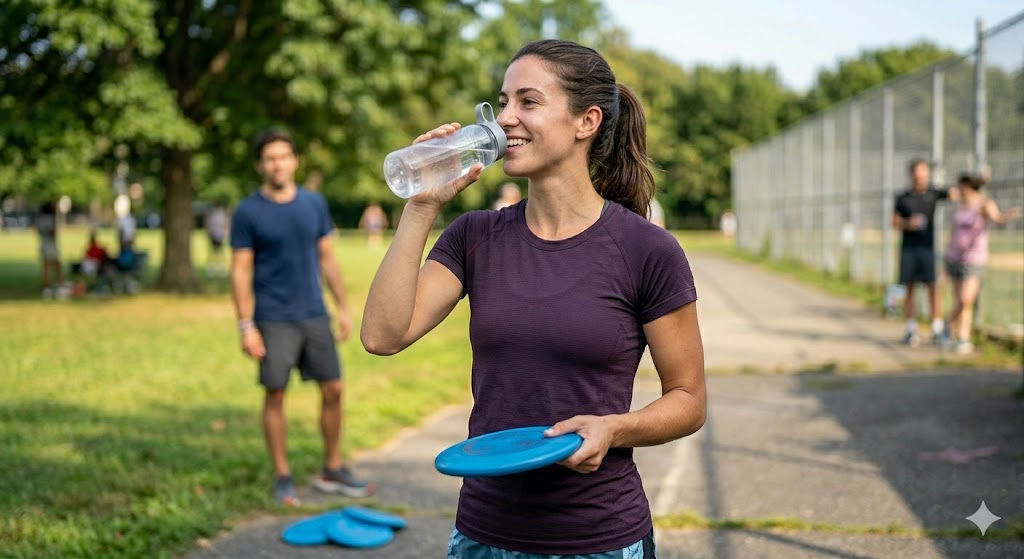
For most solo training, plain water is all you need. You are not running a marathon. You are doing focused drills for 15 to 30 minutes. Water handles that.
If you are doing a longer field session in the heat, especially pull practice or running drills on a hot day, bring a water bottle with you to the field. Consider adding an electrolyte packet or a pinch of salt. But for 90% of your solo practice, two glasses of water before you start is enough.
Nutrition: Feed the Machine
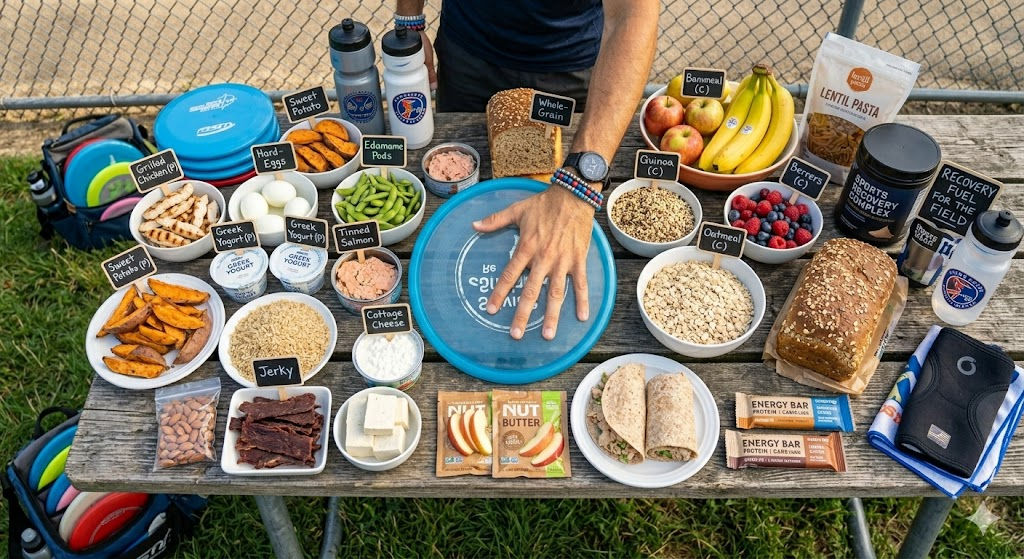
Ryan Morrison's nutrition advice is straightforward and easy to follow. Consistent protein at every meal. Breakfast, lunch, dinner. Protein is how your muscles adapt and recover. It is not just for bodybuilders. It is for anyone who wants their body to respond to training.
If you are doing solo practice regularly, which is the entire point of this book, your muscles are constantly breaking down and rebuilding. Protein is the raw material for that rebuilding process. Without it, your progress stalls.
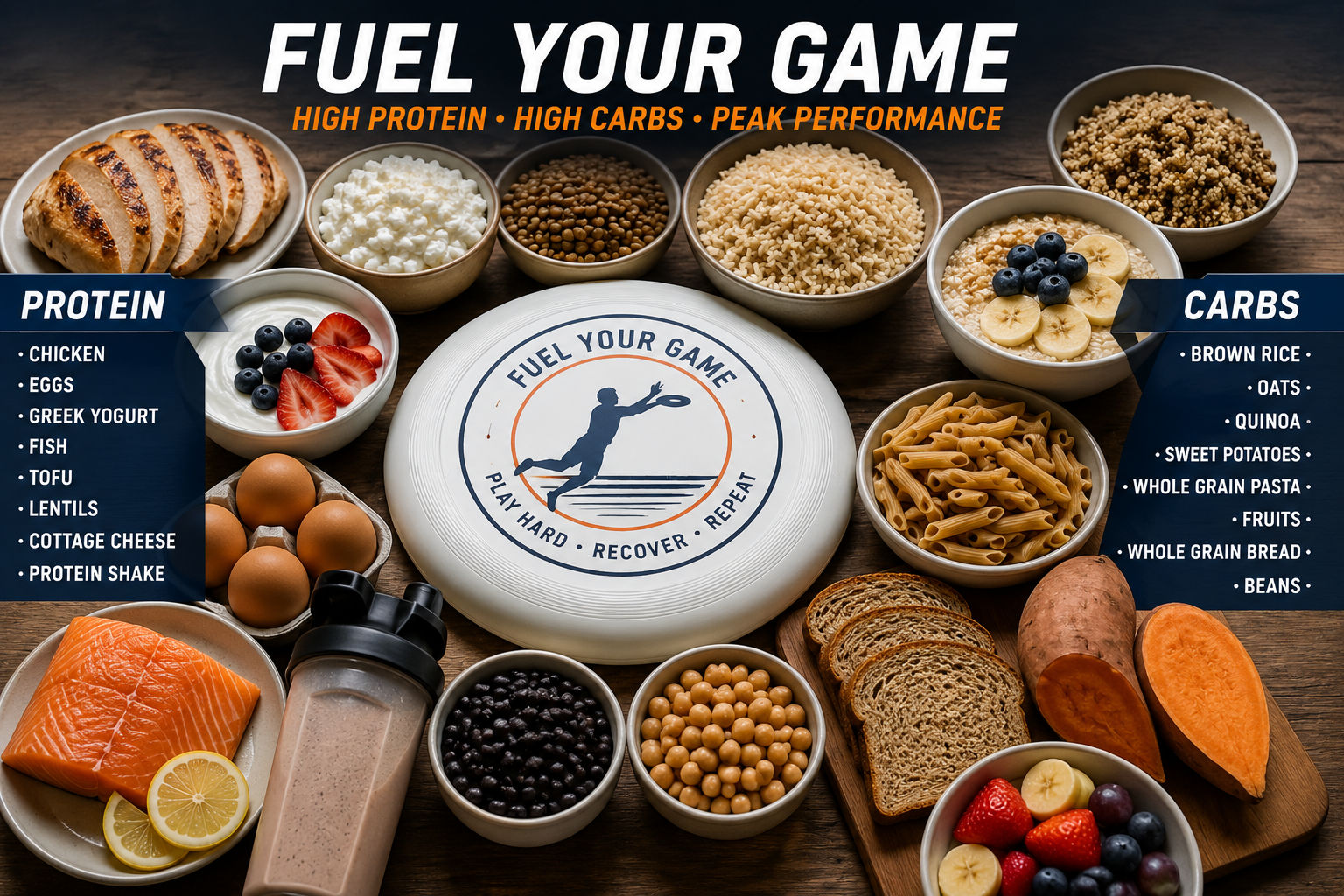
You do not need a special diet. You do not need supplements. You need to eat protein at every meal and not skip meals on training days. Eggs, chicken, fish, beans, Greek yogurt, whatever works for your life. Just make it consistent.
If you know you are going to do a longer training session, increase your carbs slightly in the 48 hours before. Carbs are fuel. Protein is repair. You need both. And after your practice session, eat something with protein within an hour. That is when your muscles are most ready to absorb it.
The 48 Hour Rule
Ryan is direct about this one. Minimize alcohol in the 48 hours before physical activity. It detracts "mentally and physically" he says, and it makes you feel sluggish.
This is not a lecture about drinking. This is a practical reality. If you had a few beers on Tuesday night and try to do your solo throwing session on Wednesday, your coordination will be slightly off, your reaction time will be slightly slower, and your motivation will be slightly lower. Slightly, slightly, slightly. But those slight differences compound over hundreds of reps.
Since solo practice can happen any day, the smartest approach is to keep alcohol light and infrequent. Your body will thank you, your reps will be cleaner, and your progress will be faster. That is the tradeoff, and you get to decide if it is worth it.
Stretching: The Habit That Keeps You Training
Being flexible in your body directly translates to having more power and finesse when throwing a disc. Make sure you are stretching fingers, arms, torso, legs, neck to maximize your throwing abilities!
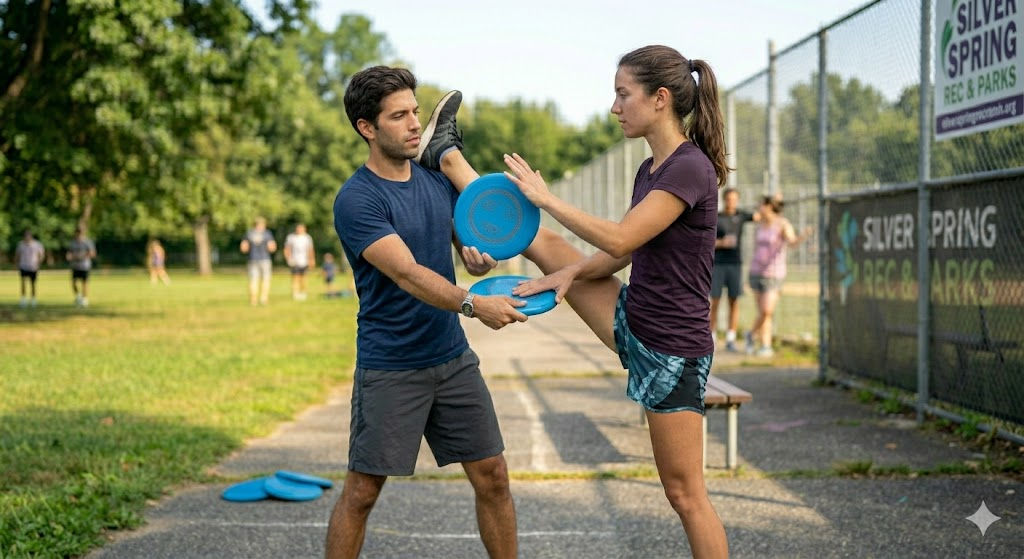
If you skip stretching and your hip flexors tighten up, your next practice session suffers. If your shoulders get stiff, your throws lose range. If your fingers and wrists are tight, your spin decreases and your grip feels off. Tightness anywhere in the chain affects everything downstream.
David Lingua, a coach and longtime player in the DC area, is passionate about this. He taught me a finger and wrist stretching routine that I now do before every solo session. It takes about two minutes and it makes an immediate difference in how the disc feels in my hand.
David Lingua's Finger and Wrist Routine
Finger spreads. Take two fingers and spread them apart. Gently press them down on your leg until you feel the stretch between them. Hold for a few seconds. Move to the next pair. Do all the gaps on both hands. It sounds simple, but most people have never stretched the webbing between their fingers in their life.
Finger extensions. Put your fingers on a flat surface, like a table or the ground. Gently press down or pull back until you feel a stretch at the base where your fingers meet your palm. This opens up the flexor tendons and gives your fingers more range of motion.
Thumb stretches. David is emphatic about this one. "Definitely do not forget your thumb," he says. "You need to stretch that thumb because otherwise forget it." Your thumb provides the top pressure on many throws. If it is tight, your grip suffers and your release gets sloppy. Stretch it by gently pulling it back, then pressing it across your palm in both directions.
Wrist circles. Rotate your wrists slowly in both directions, ten times each way. Then flex and extend them gently. Your wrists are the bridge between your arm strength and your finger control. They need to be loose.
Full Body Stretching
Beyond your fingers and wrists, your whole body contributes to disc skills. Here are the key areas to stretch before a solo session.
Torso Twists Put your fists together and elbows out, then twist your entire body, back and forth, at least 30 times. Try to twist up to 50 or 60 reps. Really feel the stretch in the twist. Get your body loose and ready to fully twist and unleash big backhand throws with full rotation of your torso.
Hip flexors. Tight hips limit your pivot range and your ability to generate power from the ground up. Lunge stretches and hip openers take 30 seconds per side and make a big difference.
Hamstrings. You need flexible hamstrings for running drills, cutting practice, and the explosive first steps that come later in this book. Touch your toes, hold for 20 seconds, and repeat.
Shoulders and rotator cuffs. Cross your arm across your body and hold it with the other hand. Do arm circles. These muscles power every throw and they tighten up fast, especially if you sit at a desk.
Calves. Tight calves affect your footwork and your ability to stay on the balls of your feet, which David Lingua says is critical for every disc skill. A wall stretch for 20 seconds per side handles this.
Finger Extensors: The Muscles Nobody Trains
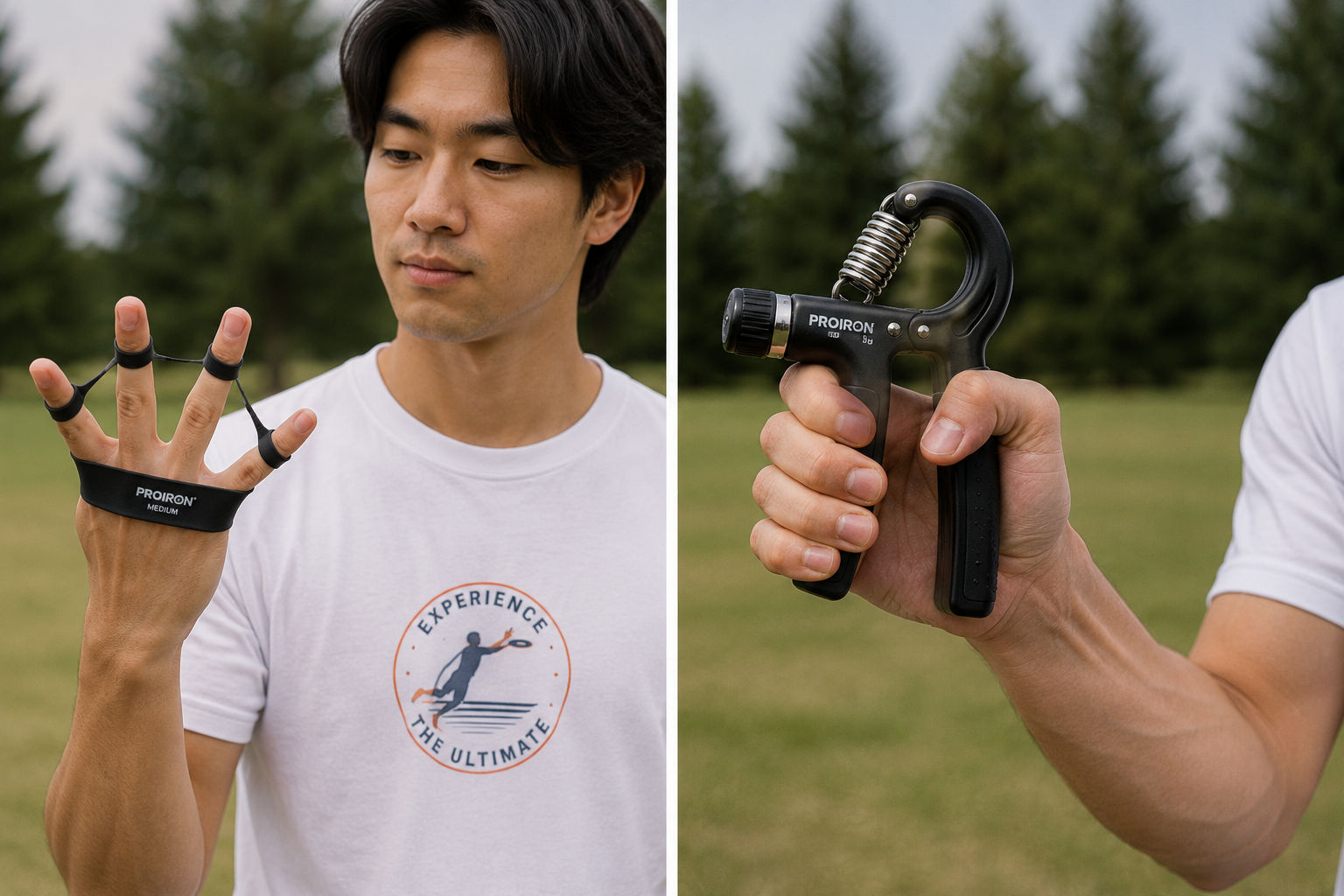
Brent Steepe, a strength and conditioning expert, taught me something that changed how I think about hand training. Most people only train grip strength, which is closing your hand. Squeezing a ball, gripping a bar, closing your fingers around a disc.
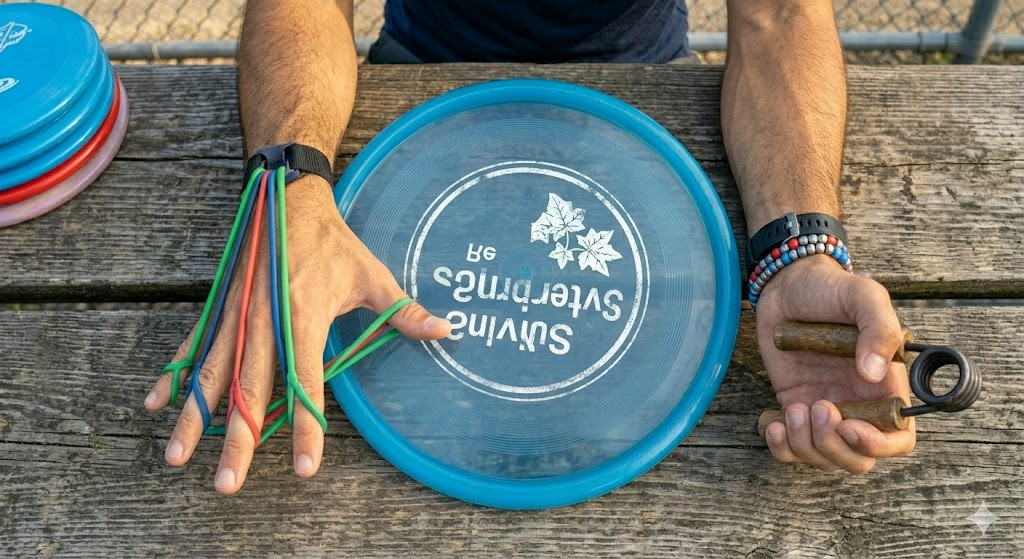
But the muscles that open your fingers, the extensors, are equally important for disc control. They provide the counterbalance that gives you fine motor control during release. If your grip is all squeeze and no spread, your touch suffers.
The fix is simple. Put a rubber band around your fingertips and spread your fingers apart against the resistance. Ten reps, three sets, each hand. Or just consciously spread your fingers wide and hold for a few seconds between throwing reps. It takes almost no time and balances out all the gripping you do.
Your Pre-Session Ritual
Before every solo practice session, do this. It takes five minutes total and it sets your body up for productive training.
Two glasses of water. Before you start. Not negotiable.
Two minutes of finger and wrist stretches. David Lingua's routine. Finger spreads, finger extensions, thumb stretches, wrist circles. Both hands.
Three minutes of body stretches. Hip flexors, hamstrings, shoulders, calves. Hold each for 15 to 20 seconds. No bouncing. Just breathe and let the muscles lengthen.
That is it. Five minutes of preparation that makes the next 15, 30, or 60 minutes of training dramatically more effective. Your muscles are warm. Your fingers are loose. Your body is hydrated. You are ready.
Wrap Up
◆ Ryan Morrison's "Free 20%": sleep, hydration, nutrition, and limiting alcohol give you a massive performance boost with zero extra training time.
◆ Sleep is when your body processes and consolidates everything you practiced. Cutting sleep cuts your results.
◆ Two glasses of water before every solo session. Simple, free, and immediately effective.
◆ Consistent protein at every meal fuels muscle repair and adaptation from your training.
◆ David Lingua's finger and wrist routine takes two minutes and directly improves how the disc feels in your hand.
◆ Stretch your whole body before field sessions. Tight hips, hamstrings, and shoulders limit everything.
◆ Train your finger extensors, not just your grip. Balanced hand muscles mean better disc control.
Action Steps
→ Tonight, go to bed 30 minutes earlier than usual. Start building better sleep habits this week.
→ Before your next solo session, do the full five minute pre-session ritual: water, finger stretches, body stretches. Time yourself. It goes fast.
→ Add protein to every meal today. Eggs at breakfast, chicken at lunch, whatever works. Just make it consistent.
→ Try the rubber band extensor exercise. Ten reps, three sets, each hand. Notice how your fingers feel afterward.
Mentor's Closing
Everything in this chapter is about building habits around your solo practice. Sleep well before you train. Drink water before you pick up a disc. Stretch your fingers before you spin. Stretch your body before you throw.
These are small decisions. Boring decisions. The kind of decisions that nobody posts about on social media. But they are the decisions that compound over months and years into a body that is ready for anything.
And here is the bonus. When game day comes, whether it is the Saturday afternoon pickup at Hyattsville or a tournament you have been training for, you will not need a special routine. You will already be doing it. Because this is just how you prepare. Every time. For every session.
The habits you build in private become the advantages you carry in public. Take care of your body, and your body will take care of your game. :)